• Skip to primary navigation
  • Skip to main content
  • Skip to primary sidebar

StoryToGo

Exploring storytelling in its many forms in this digital age

  • Our Story
    • Our Creatives
    • Join the StoryToGo Community
  • Community Resources
    • Web Monetization Guide
      • Web Monetization Resource Library
        • Web Monetization Tutorials
        • Web Monetization Research Papers
        • Interviews and Case Studies on Web Monetized Projects
      • Web Monetized Content Library
        • Web Monetized Courses
        • Web Monetized Podcasts
        • Web Monetized Social Networking Platforms
    • Podcasting with my Cat
      • Sustainable Funding Series Vlogcast
      • Encounters in EdTech Podcast
      • The Creative Farm Podcast
      • Boma Global Studios Podcast
    • Job Board
    • Storytelling Case Studies
  • Digital Magazine
    • Accessibility
    • Art Therapy
    • Blogging
    • Case Studies
      • Analyst Report
      • Extended Reality
      • Sustainable Funding
    • Community Building
    • EdTech
    • Gaming
    • Immersive and Interactive Media
      • XR
    • Performance Arts
      • Acting
    • Social Media
    • Storytellers
      • Alex Charters
      • Bjorn Yearwood
      • Erica Hargreave
      • Henry Hargreave
      • Jennifer Rose Garcia
      • Lori Yearwood
      • Mary McDonald
    • Tech Tips
    • Web Monetization
  • Professional Development
  • Calendar
  • Contact

Storytellers

Ringing in 2020 with Storytelling and Digital Media Courses at BCIT

January 1, 2020 by Erica Hargreave Leave a Comment

As we ring in a new year, it had me reflecting on what is important to me, and this old proverb …

Give a man a fish, and you feed him for a day. Teach a man to fish, and you feed him for a lifetime.

Photographed by Cristian Palmer, care of Unsplash.

There is no greater gift that you can give yourself or another than learning a skill that helps pursue one’s passions. This is the reason why sharing knowledge is an important part of what we aim to do here with StoryToGo.

The Importance of Sharing Knowledge For Us

When I started speaking in 2008 about bridging the worlds of media, interactive and cross-platform storytelling, and digital media, it occurred to me that while inspiring people through my talks was great and all, to truly help people to take action, they needed a course giving them guidance and support while they build and craft their storyworlds.
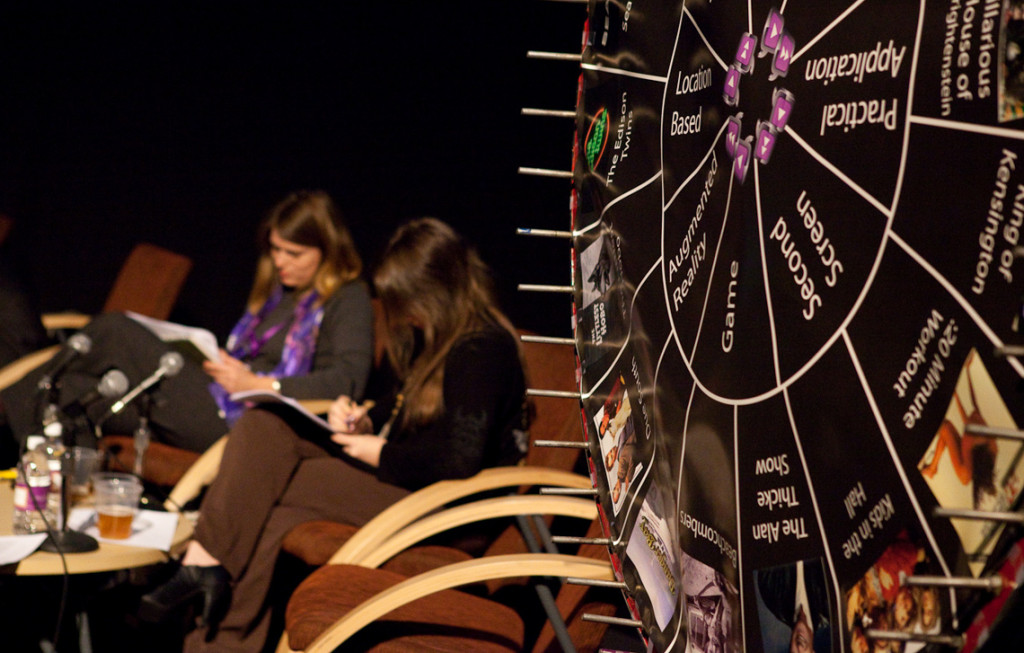
Interactive Storytelling
Erica Hargreave and Caitlin Burns on a Panel on Convergent Storytelling.
Photographer: Liz Kearsley

A year later, after pitching the local post secondary schools, my first post-secondary school courses launched at BCIT and Capilano University. Since then my team and I have also built courses and workshops and taught community, undergraduate and graduate courses at Ryerson University, Humber College, and NVIT. In addition, we’ve helped build new programs and revise old programs. It has both been an honour to teach and share with others, and fulfills a passion of ours. We love teaching.

Creating Our Courses Online

In 2011, after speaking in Egypt, we recognized that to truly make a difference to people that could most benefit from our courses, we needed them to be available online.
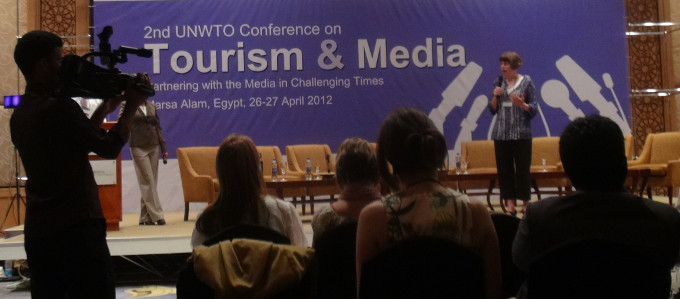
Erica Hargreave speaking on ‘Real Time’ Storytelling at the UNWTO Conference on Working with Media in Challenging Times in Marsa Alam, Egypt.

Thanks to BCIT and our colleague Kevin Ribble, they were by 2013. This has also allowed Lori Yearwood to help build and teach those courses with me.

2020 Courses at BCIT

I am happy to share that as we move into 2020, we now have 2 online post-secondary credited courses and 2 intensive community courses offered through BCIT’s Broadcast Media and Communications Part Time Studies. All of our courses are project based, in which our students come out of them having built or built upon projects of their own that they are crafting for their future endeavours.

For those of you who are looking to give yourself and someone in your life the gift of learning this year, these are a few of the courses that we will be teaching in 2020:

  • BCST 1073 – Building Your Digital Media Presence (an online, work on your own schedule each week, course starting in January)
  • BCST 1193 – Social Media Storytelling (an online, work on your own schedule each week, course scheduled to be offered in April)
  • BCST 0107 – Travel Writing: Your Journey from Branding to Monetizing your Travel Stories (stay tuned for a Summer intensive course offering)
  • BCST 0108 – Creating and Marketing your Own Web Series (stay tuned for a Summer intensive course offering)
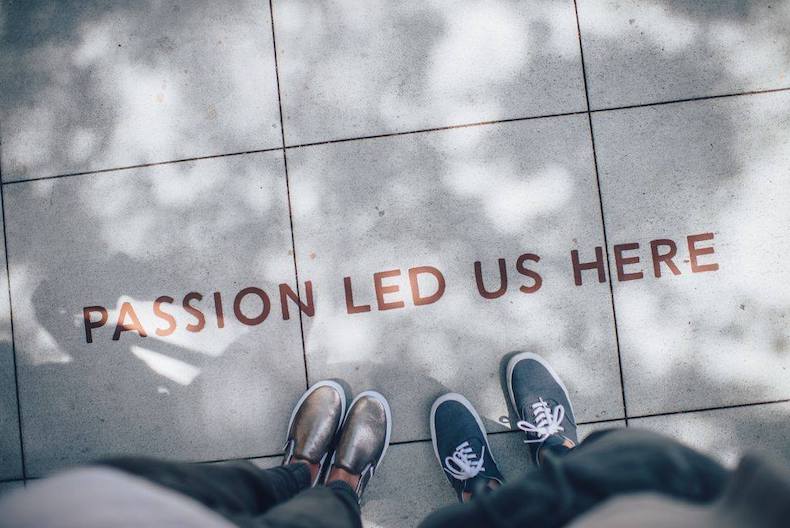
Photographed by Ian Schneider, care of Unsplash.

More Coming on StoryToGo

Also keep your eyes peeled here as we will be launching the StoryToGo Classroom site later this year with mini online courses, and tailored online and blended courses for organizations from us and our rich group of storytelling friends and colleagues.

If you have a course that you would love to see offered through StoryToGo, please let us know in the comments, and if you wish us to tailor create a course for your organization, please send us an email.

Photographed by by Danielle Macinnes, care of Unsplash.

Raising a glass of whatever your preferred beverage to a happy and rewarding new year and new decade, rich in learning!

Filed Under: #StoryToGo, Courses, Erica Hargreave, Events, Instructor News, Our Community, Storytellers Tagged With: BCIT, storytelling, storyworlds

River Revery – a Sustainable Funding Case Study

December 20, 2019 by Mary McDonald Leave a Comment

River Revery is a community-based, collaborative project of two London, Ontario  writers, artist/educator, poet Penn Kemp and media artist and educator, Mary McDonald. River Revery addresses the artists’ concerns with the health of the habitat surrounding the Thames / Deshkan Ziibi River. In addressing local environmental concerns in an artistic and poetic way, and through inviting community participation, they aim to engage with global, universal concerns for the environment.

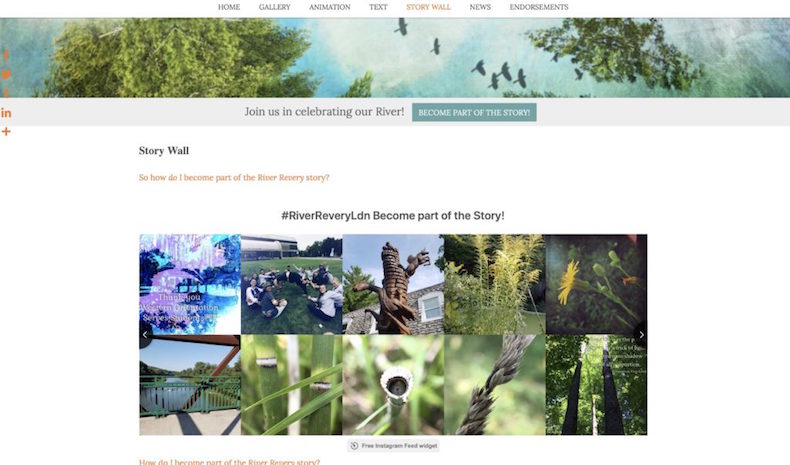
Story Wall River Revery

River Revery’s Transmedia storytelling initiative, #RiverReveryLdn invites Londoners to join in “knowticing” intricate details of beauty in London’s natural world surrounding our beloved Thames/Antler/Deshkan Ziibi River. These small moments of beauty help to remind us to celebrate and care for the beautiful and fragile environment within which our community is held.

Creators

Mary McDonald, MultiMedia Artist, marymcdonald.ca

Penn Kemp, Poet, http://pennkemp.weebly.com/

Country

Canada

Link to project

RiverRevery.ca

The Creators

Poet Penn Kemp, and editor of Pendas Productions

Pendas Productions is a micro publishing company publishing artbooks of poetry and drama, often in combination with CDs. Since 1977, Pendas has produced 30 poetry artbook/CD and DVD combinations often in collaboration with musicians and artists with editor Penn Kemp. We have featured more than 20 Souwesto authors and produced several anthologies.

Penn writes: “Poetry is an essential expression of the human spirit: collaborating with Mary extends poetry’s possibilities and audience to the wider community. I believe that poetry is a path to environmental activism and change”.

Media artist Mary McDonald

I am passionate about community participation in arts and the ways in which new media and accessible creative technologies can make that happen. I create interactive Augmented Reality installation and transmedia storytelling using accessible digital mobile technology to show, share, invite and empower others to bring and contribute their artistic responses to “Become Part of the Story.”

I have been very active in the London arts community for a number of years, through a number of artistic disciplines. Through these projects and through my development as a multimedia artist, my passion for bringing community together through the arts, creating opportunities for contributions of the community to the arts and inviting their interaction and engagement has become increasingly important to me and a foundation of my work.

I plan to leverage River Revery as a way to connect our community, our artists into a creative collective. Bringing our attention and our intention to our natural environment is of paramount importance to me. What we care about is what we will care for. Using artistic responses, new medias and accessible, mobile creative technologies, enables people to bring their attention to the beauty around them, to “knowtice” it with intention, which creates in turn, collective environmental action.

Through interactive guided Augmented Reality poetry/art walks and participatory exhibitions, walking workshops and in-place workshops focussing on how to create transdisciplinary art with accessible, mobile digital creative technologies the community of London will be invited and empowered to become part of the story of River Revery, uniting community and artists into a creative, collective, generative response to the environment which envelops London.

Screenshot of RiverRevery.ca website

The Project

River Revery is a collaboration of  London, Ontario artists — poet and activist Penn Kemp, and multimedia artist, Mary McDonald. River Revery received a City of London’s Community Arts Investment Program grant (CAIP grant) from the city of London through the London Arts Council. This collaboration was designed for building community engagement around the appreciation and protection of the Thames/Antler River that runs through London and involves community arts participation through transmedia storytelling. 

Wishing Well AR Artwork
AR artwork for Wishing Well

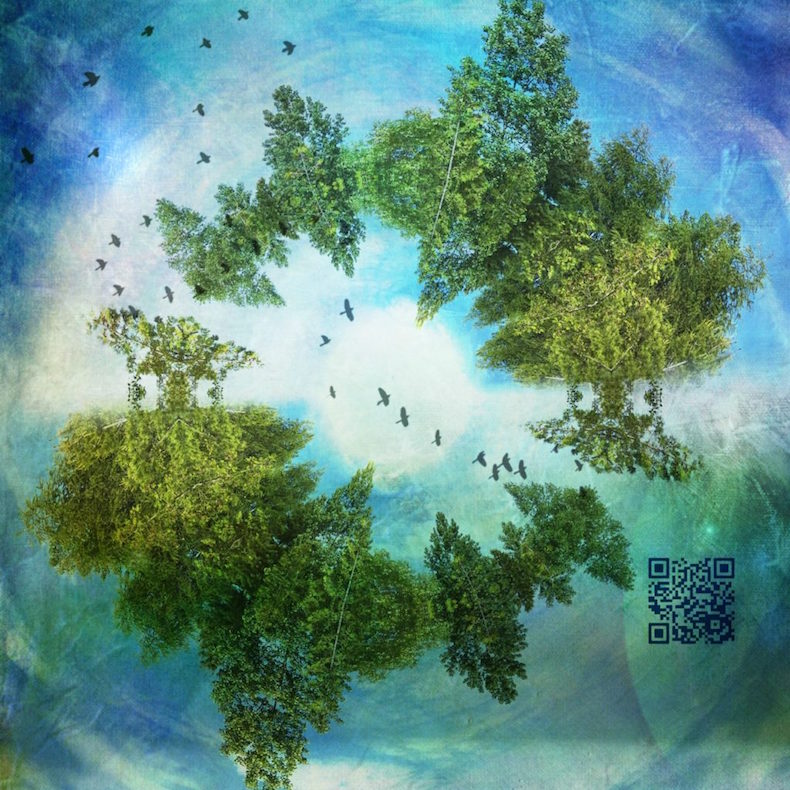
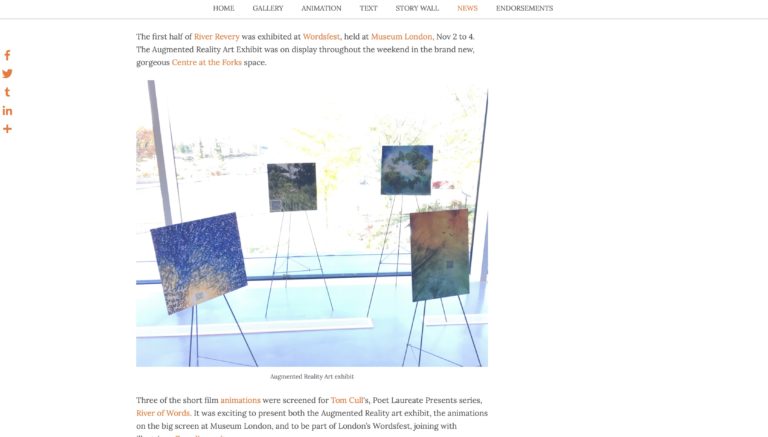
The project includes an Augmented Reality moveable art exhibit which is a series of artworks with embedded QR codes, printed and mounted on aluminum plates. These hang on free standing metal easels, which allows the freedom to have the exhibit to occur in any location, including in natural locations outside such as along the river, at the Forks, and in conservation areas. The visual art is linked through QR codes (a very simple but accessible and effective method of AR) to Mary’s multimedia sound and visual interpretations of Penn’s poems. The project also includes a website on which the Community Story Wall features community participation in arts, the text of the poems and the sound and poetry film interpretations as well as hosting the OER components and community workshop materials. 

The main goals of the project are to leverage River Revery as a way to connect the community, our artists, our schools to celebrate and “knowtice” the beauty around London, our River…to “knowtice” is to acknowledge the value, appreciate and care for the natural ecosystem London sits within.

As well, the artist aims to break down the barriers between artist and “audience” to become a collective community, all active participants, caring, creating, sharing and learning with accessible creative technologies, art, and transmedia storytelling. connected and acting through art, and transmedia storytelling.

Story Wall at RiverRevery.ca
Instructions can be found linked on the Story Wall at RiverRevery.ca

Road to Sustainable Funding: 

Free/OER Elements:

The text and the poetry films are freely available on the website. Print versions of the entire poetry book which includes some photographs and QR codes to the online AR films and sound explorations are available for purchase. Also available to purchase are prints of photographs and a DVD of the poetry films. 

OER downloadable and remix visuals including film segments will be available on the community workshop resources page on the website. Also included here will be plans and curricula for community workshops for participatory and engaging art projects utilizing mobile, accessible creative technologies. 

Developing a Multiyear Plan:

River Revery  — Become Part of the Story

River Revery at London, Ontario 2018 Wordsfest.
Premiere exhibit of River Revery, Centre at the Forks, Museum London for Wordsfest 2018.
  • 2018 Creation of River Revery
  • 2019 Community Engagement
    • walks and workshops
    • possible partners: Thames Talbot Land Trust, UTRCA, Fanshawe, Antler River Rally, Western Serves student volunteers, London Public Library, Centre at the Forks 
  • 2020 Bring in other artists for collaborative, curated events and explore other partnerships
    • “Bring the Outside In” (working title) large, curated transdisicplinary event(s) bringing together community, artists, environmentalists

Developing River Revery’s Broad Community Engagement, a Multi-year Plan:

  • 2018 Creation of River Revery —
    • 4 AR visual artworks have been printed and mounted on aluminum plates which can hang from free standing metal easels such that the exhibit can be placed anywhere — including outside along the river, in the park at the forks of the river in the centre of downtown…
    • These artworks are linked to 4 poetry films which are sound and visual interpretations of Penn’s poems which I have created with accessible mobile technology
    • 4 artworks remain to be printed and mounted, (cost exceeded well beyond capacity)  linked to 1 more poetryfilm and 3 sound and music interpretations
    • Community Story Wall and transmedia storytelling #RiverReveryLdn is live and there has been some initial engagement with the project through the initial exhibition of the work as well as volunteer Western University students who raised awareness by distributing invitation cards and engaging with the public.
    • All of the elements are free to access. They are not openly licensed as the poet is a strong believer in Access Copyright. In Canada, the majority of the literary community are advocates of Access Copyright.
    • OER: The workshop materials I create, located on the Resources page, with the Community Story Wall, are OER and will include workshop plans along with art only — downloadables — images, video, nature and music sound clips to jumpstart or remix projects
  • 2019 Broad Community Engagement — walks and workshops
    • There is a possibility of partnering this year with the Thames Talbot Land Trust, to provide guided AR poetry walks in conjunction with their “Mood Walks,” a partnership they have with the local chapter of the Canadian Mental Health Association, as well as other walks and events they program such as their volunteer BBQ — possibly funded through a second Community Arts Investment Program grant
    • Explore and implement “Advertising through Arts Partnerships” initiatives — local businesses pay to “host” the AR Artwork for River Revery with the promotion of this multiple location “River Exhibit” done through the London Arts Council, the City of London, Tourism London etc which often offer free promotion of cultural and artistic events
    • Possible other partners include the local Conservation Authority, Fanshawe/Komoka Provincial Parks, Antler River Rally group, Western Serves student volunteers
    • The London Public Library has expressed interest in a proposal for a series of community workshops in partnership with their new emerging media lab — focussing on community participation in art with accessible mobile creative technologies 
    • The London Public Library has also expressed interest in hosting an exhibit and interaction with the AR participatory installation, Still/ed Here which includes the poetry film and AR installation, On the Margin of History
    • Possible additional workshop partner: Museum London’s Centre at the Forks emerging media labs
  • 2020 — Beyond River Revery to expand out into larger events that Mary would curate
    • “Outside In/Inside Out” (working title) large, curated transdisicplinary event(s) bringing together community, artists, environmentalists
    • I have discussed the possibility of launching these in connection with London Arts Council’s new social enterprise — Culture City X Tours — some funding through the London Arts Council
    • Lead AR poetry walks and walking workshops for the Thames Talbot Land Trust Passport to Nature program, which is funded through their corporate, community and private sponsors
  • Additional funding partnerships to pursue: City of London, tourism London, local businesses and foundations, private donations, patronage, “adoption”/sponsorship of events/artworks 
  • Explore and implement ecosystem that connects local businesses with artworks to benefit from “Advertising through Arts Partnerships” in which a reverse advertising model is implemented — the local business pays the artist to host/rent the artwork (AR artwork in the case of River Revery) and this hosting, perhaps as part of a temporary, or on-going exhibition of single or multiple locations is promoted as an arts and cultural event, perhaps in conjunction with a regional arts venture, by the artist and the arts organizations they partner with — thus leveraging the arts and culture networks developed in a city/region for the benefit of both local businesses and artists (producing thriving cities)
  • I am also exploring other ways to connect local businesses in support of the arts — either through in kind donations, supporting live or online events, sponsoring the mounting of artwork …other ways to include local businesses within the funding “ecosystem” beyond simple advertising or patronage. *Building the value and vested interest into the partnership so that it becomes a reciprocal, multiplying  partnership
  • Other possible sources of revenue include sales of poetry books for Penn and printed photos and artwork, DVDs of the poetry films for Mary.
  • Additional opportunities to investigate include sales of other printed items with digital art/photo art/ AR art through online companies like Redbubble and links on the site to purchase prints, the book of poetry, photography and QR codes, and even possibly other things like clothing/home decor w the visual art and/or the QR code triggers to the AR.

Lessons learned, tips for success:

  • Key takeaway: the larger the project became, the more people it could impact and involve not only increased the value of the project to the community but opened up new opportunities and avenues for funding to pursue
  • It’s very difficult to be creating the art at the same time as you are trying to promote and arrange events and collaborations. Ideally these time periods are separated and/or some of the legwork or preparation for crowdfunding, developing sponsorship and partnership relationships ahead of creating time.
  • Looking at all the elements with a “whole value” mindset is essential — aspects of the work may be fuelled solely by passion and driven by determination and my own money and time — however, the exchange value of this work or these aspects of a project may prove just as, or more valuable in terms of future connections in the long run — keep my eyes on the big picture
  • Continue to look at each project as a stepping stone to the next “level”, the next vantage point from which it is possible to see or launch your next project
  • Expanding the project also allowed me to expand into other ways of funding — moving towards a more sustainable funding model
  • However, as I move forward with more and more projects, I am developing my “pie in the sky” approach — one that allows for continual spiralling iterations of a project that at the same time allows for funding “slices” to be added in to the pie as it grows
  • Think Creatively — financial support opportunities are directly linked to the numbers of people impacted and reached which often has at least an incidental corresponding relationship with the cultural value of a work — as the community reached, impacted, connected with, around a project grows, so too doors to potential funding opportunities open.

Filed Under: #StoryToGo, Case Studies, Mary McDonald, Storytellers, Sustainable Funding Tagged With: augmented reality, poetry, sustainable funding

Open Stax – a Sustainable Funding Case Study

November 30, 2019 by Mary McDonald Leave a Comment

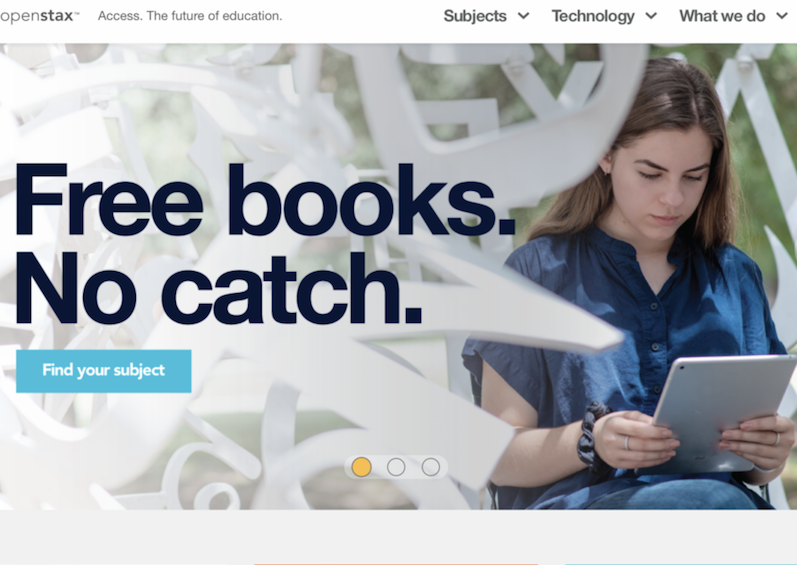
Open Stax has been producing OER textbooks since 2012 when they published their first 5 titles. They have 32 titles today, with 6 more coming within the next few months. 2.7 million students in the States use their content per term, and their textbooks are in 58% of degree granting academic institutions in the States. 

Creators:

Interview with Daniel Williamson, Managing Director

Country:

Houston Texas, US.

Interview Date: 

March 22, 2019

Link to Project: 

https://openstax.org

Funding Methods:

Non-profit

Ecosystem model involving for-profit partners who sell value added services who then give back a “mission support fee” along with sales of print versions of the textbooks.

Open Stax is a part of Rice University and is supported by foundations such as the Bill and Melinda Gates foundation, the Hewlett Foundation along with others.

Textbook content is written by paid educators and experts.

The Project:

Open Stax provides free web-based, post-secondary level OER textbooks. 

As cost is one of the number one drivers for the use of Open Educational Resources, so if we can target those high enrolment, high expense courses, we tend to have really high traction.

Daniel Williamson

Open Stax textbooks have been localized for use throughout the US, in Canada, and in Poland.

Broadly, because these are OERs, we see this content used everywhere.

Daniel Williamson

UNICEF told Daniel about Learning Equality’s use of their content. Learning Equality is a group that works in crisis and conflict zones, they have been loading all our content onto their portable internet for use by post-secondary learners in these situations. 

https://learningequality.org/about/

The Creators: 

I spoke with Daniel Williamson, Managing Director for Open Stax who described to me the mission and goal of Open Stax, their business model and their insights for sustainability of OER as well as their hopes and goals for the future.

The Road to Sustainable Funding

The business model for Open Stax was designed from the very beginning for Sustainability. Open Stax has built an ecosystem style model.

In this ecosystem, Open Stax produces the core content. For profit partnering companies offer for cost, value added technology services such as virtual simulations, and clicker apps with are integrated with the content of our textbooks. These partnering companies then pay Open Stax a portion of the fee that has been charged to the student which then goes back into Open Stax to support their sustainability, and to keep the content up to date. This ecosystem model brings the benefit of co-marketing to their partners as well as giving them access to high quality educational content.

Open Stax looks at and targets the highest value to decide which textbooks to produce, although their goal is to have a much more comprehensive library. They look at the size of the market and the number of students who would be impacted and at the cost of the resource for students and balance these. As the point of Open Stax is access for students, and to make education more affordable, the partnering companies are mandated to keep their fees to the students low.

As well, print versions of the textbooks are produced for sale at a low cost by Open Stax and that revenue is fed back into the system to develop further textbooks and to keep the content fresh and current. “As there are so many students using the content, we are able to bring the unit costs down.”  

Daniel describes his key thoughts on sustainability:

You need to build in sustainability from the beginning as it’s really difficult to retrofit these things. Most of the OER players are reliant upon grant funding — but you can’t wait until the grant runs out to figure out a sustainable way forward.

There are two aspects to sustainability — fiscal and the people. The money makes it possible but it’s the people who are actually going to take and give this content a life of its own. So we really need to feed both of these.”

Daniel Williamson

Sustainability is somewhat controversial — Stick to your guns. There will be people who might not like what you’re doing and that’s ok. It’s good to challenge each other. As long as you are really connected to that mission which we here at Open Stax believe our mission is to improve access and improve learning for all..that you’re going to be guided by those mission principles which will lead you in the right direction. 

Daniel Williamson

Into the Future

Daniel believes that by ensuring that the Open Stax content is high quality while keeping the content generic, this allows Open Stax textbooks to serve as the foundation for localization. 

If we can reduce the barriers to entry for people to OERs, then we’ll see more and more people participate.

Daniel Williamson

When talking about sustainability, Daniel mused that there’s a lot of interesting models emerging, and that we’ll see which models survive.

The thing that I dream of is the day we’re not just sustainable, we’re in perpetual growth.

Daniel Williamson

In thinking about what that perpetual growth model might look like, Open Stax is calculating how many titles they need to have produced and generating revenue, to allow them stability and sustainability enough to invest in continuously growing their library and to react to changes in the market.

Now what we’re thinking is about how can we both spur greater ownership and creativity where people take and think what ca we do next…I think there’s a lot of ways that can lead to expansion…

Daniel Williamson

Key Opportunities:

I think OER really unlocks the ownership piece. It allows content to become this foundational knowledge that is infrastructure which brings us to this opportunity which now we can build upon. We can start having a research infrastructure that allows us to start diving deeper into how humans learn, and how can we help them learn most efficiently and effectively instead.

Daniel Williamson

A lot of tremendous opportunity there to move beyond just consumption of content to really thinking about it as research infrastructure for understanding how we move the state of the art in terms of education forward.

Daniel Williamson

Filed Under: #StoryToGo, Case Studies, Mary McDonald, Storytellers, Sustainable Funding Tagged With: open educational resource, sustainable funding

Swaddled – a Sustainable Funding Case Study

October 30, 2019 by Mary McDonald Leave a Comment

Swaddled is a community driven, crowd sourced series of art collages. Swaddled began from a call from the group, Making Grey-Bruce Home, for  a project which involved creating an online resource for newcomers to Grey-Bruce county and to Canada.

Creators:

Jennifer Hicks

Country:

Canada

Interview Date: 

April 4, 2019

Links to Project: 

https://hicksinthesound.simdif.com

Instagram at Woodchuckandbrush

https://www.instagram.com/woodchuckandbrush/

https://www.instagram.com/p/BxuYb_uFoBc/

Funding Methods:

Artist fees for exhibitions

Sales of artwork

Subsidizes artwork by providing services such as facilitating workshops around her participatory art

Hicks shares her artwork, much of which is self-funded, freely as it is an investment to build an audience and to leverage for future projects and exhibits.

The Project:

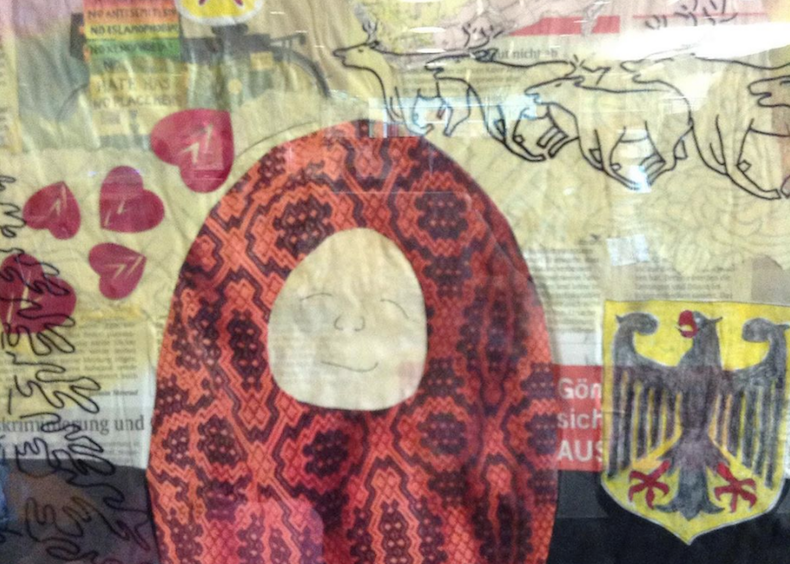
Swaddled is a touring, community driven, crowd-sourced series of collages. Each work begins with the text. These texts are newspapers in other languages, from other cultures, donated to her by friends and family. This text forms the background which Jennifer then collages over based on the stories she receives from friends, family and viewers. 

After the exhibit was shown for the first time in Owen Sound, I received feedback from the people who saw it, who are strangers to me but who have experiences in those places or with that culture. And then their stories get landed on top of the artwork in the form of collage — additional symbols, icons, words, to represent their reality with that language, and that culture.

Jennifer Hicks

The Creators:

Jennifer Hicks is a Canadian visual artist and teacher. Her artwork includes the participatory works — Swaddled and Turtle Island Footprints. 

I think this is the way artists, teachers, facilitators need to be — open to what comes, and chase all leads — if we choose to live this way.

Jennifer Hicks

Road to Funding Sustainably

Services —Jennifer’s funding model includes revenue comes from offering added value workshops around her participatory artworks. Building a community around her work as well as community co-creation and collaboration are keys to her funding model.

Sales of artwork — When Swaddled goes to its next exhibition location, the Japanese piece which has been sold, will be replaced by a piece in another language and about another culture. “We’ll see, it depends on what viewers recommend and offer, from their stories, their experiences. 

Art fees for exhibitions of work — Jennifer looks for places to exhibit her work, aiming for locations that will pay artist fees, while keeping in mind the other kinds of value she gains from exhibition in places where they don’t pay artist fees. These other kinds of promotional value include community building and networking, which may lead to future paid exhibitions 

Partnering — Jennifer partners with groups such as Influencers Motivate/Influencers Motivating Influencers for paid opportunities to work and travel, connect, and to promote self as artist, teacher and facilitator. Influencers Motivating Influencers is a group who arrange tours through remote Northern Canadian communities, focussing on arts and wellness. https://www.facebook.com/InfluencersMotivate/  https://www.instagram.com/influencersmotivate/ 

Into the Future

A really important piece to it is — you choose who align yourself with so that you’re not spinning your wheels putting out artwork to every juried exhibit that comes along or applying just anywhere to show your artwork. It is a thoughtful, meditative process where…having this exhibit at Hamilton Turner Park Library is not a paid gig. However, it makes sense to be there for future, down the road networking and possible other exhibits that will be paid. It’s a tricky situation where you need to learn to be a good thinker, and promoter and networker and those things will lead to the money that you need to keep going.

Jennifer Hicks

Providing Swaddled was a community service. It was healing for me and great for the community and led to this really neat community powered feedback opportunity for the viewers.

Jennifer Hicks

Jennifer is currently looking for a new home for Swaddled. She is hopeful it will exhibit each year in a new city, at least once a year, and ideally exhibited in a place where they pay artist fees.

Facilitating workshops is a key part of Jenifer’s funding model. She would like to provide workshops around the Swaddled series and feels this would add value to the exhibit wherever it goes

Granting process is only accessible if you have access to the technology needed to apply. 

Obtaining funding, applying for grants is difficult for collaborative groups in terms of the scope needed to meet deadlines. Communication amongst members and meeting timelines can be a challenge. 

Keys to Success to Carry Forward

Tips for Emerging Artists: 

Instagram has been a good place for Jennifer to promote her work, to develop art-related projects, and for connecting with other artists and possible jobs.

Sarah advises that one possibility is to go to your local city or town hall. They often employ someone (with a small budget) to do a yearly juried art exhibit in the city hall. 

Poet Laureates ..why don’t we have artist in residence for each city or town?

Filed Under: #StoryToGo, Case Studies, Mary McDonald, Storytellers, Sustainable Funding Tagged With: crowdsourced, crowdsourced art, sustainable funding

Learning Stop Motion Filmmaking With Lego

August 21, 2019 by Erica Hargreave Leave a Comment

As some of you may have guessed, we wear many hats. We are storytellers, educators, technologists, scientists, dancers, and marketers. We love that the work we do allows us to put on those many hats, and enjoy the different experiences and facets of our work, including still getting a little bit of kid time with Ahimsa Kids.

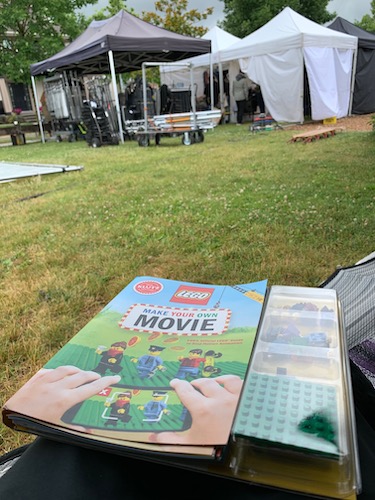
This image has an empty alt attribute; its file name is Lefo-Make-Your-Own-Movie.jpg
Loving this book.

Recently with that, I had the opportunity to work with an intelligent and engaging 10-year-old, who once he finished his school work, we were able to dive into the world of edtech and stop motion filmmaking together. Stop motion is something he has a keen interest in, along with lego, and he’d just been given the Klutz: LEGO Make Your Own Movie book. It didn’t take long after flipping through the book, which was a 2018 Toy of the Year finalist, for me to become just as hooked as he was on the process. So the two of us embarked on making our own first stop motion lego film together.

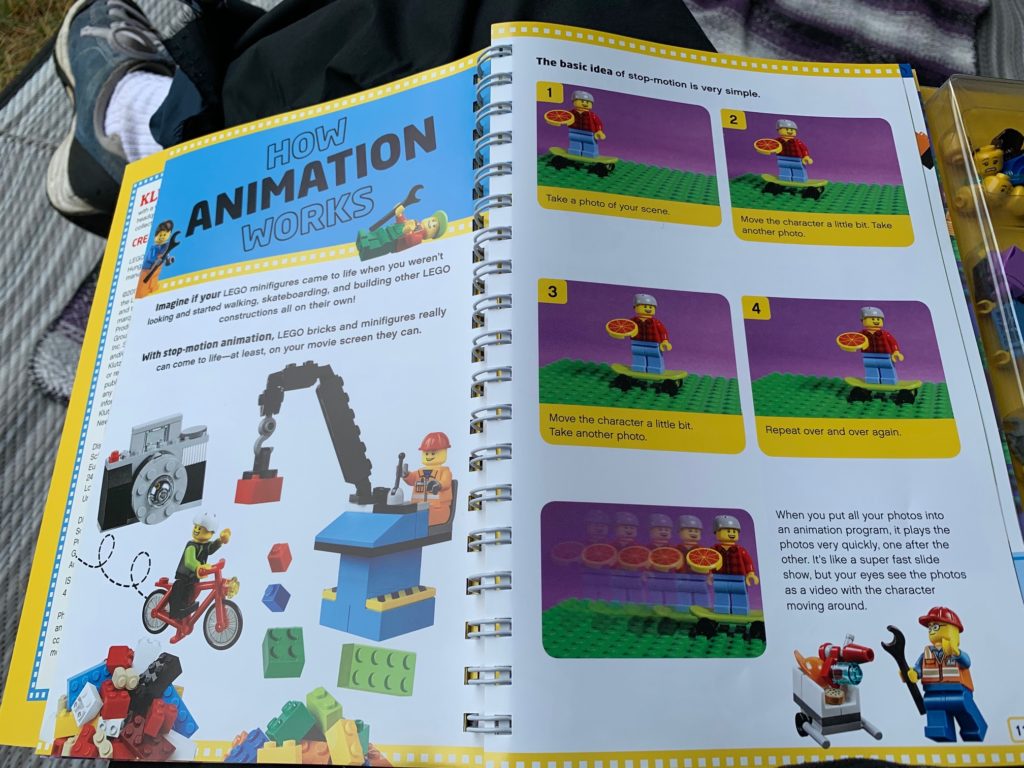
This image has an empty alt attribute; its file name is How-Animation-Works-1024x768.jpg
Leafing through the pages.

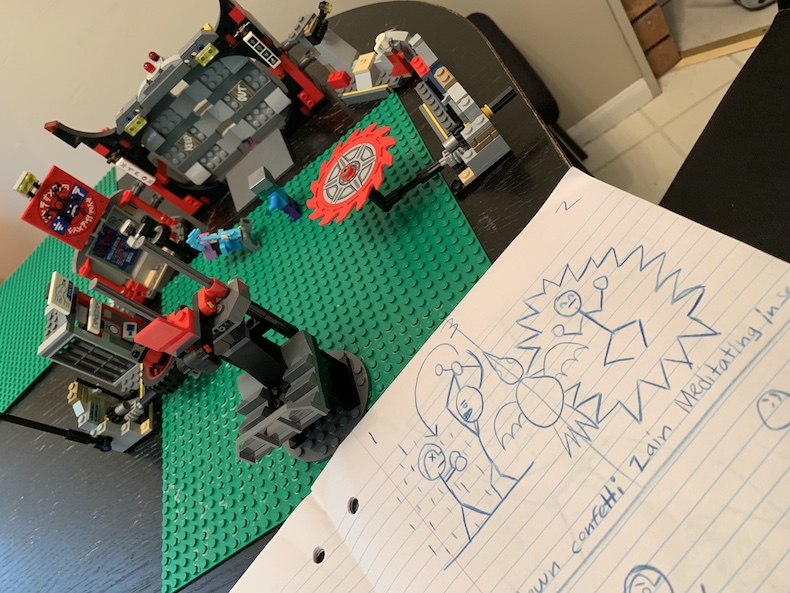
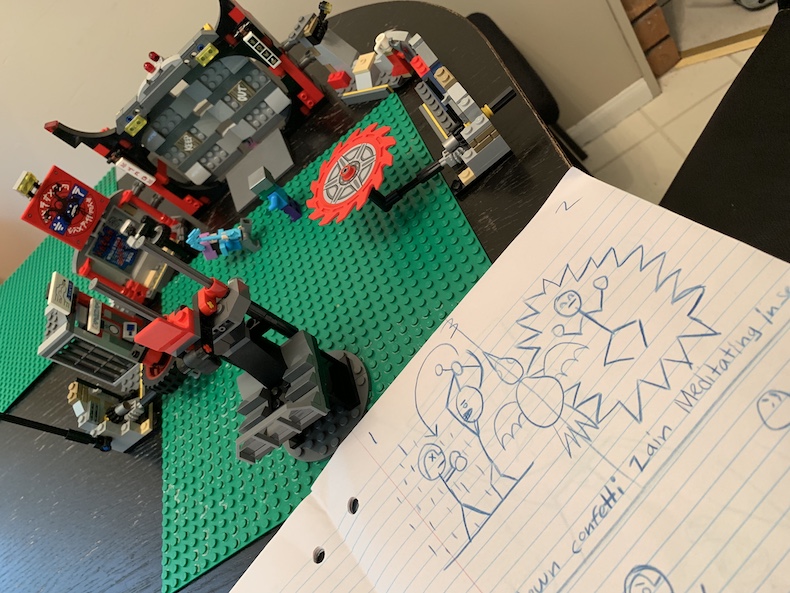
This was a fun cross-curricular project to embark on. In the process, my young student developed and wrote a story, learned to storyboard …

This image has an empty alt attribute; its file name is Storyboarding.jpg
Laying out a scene from the storyboard.

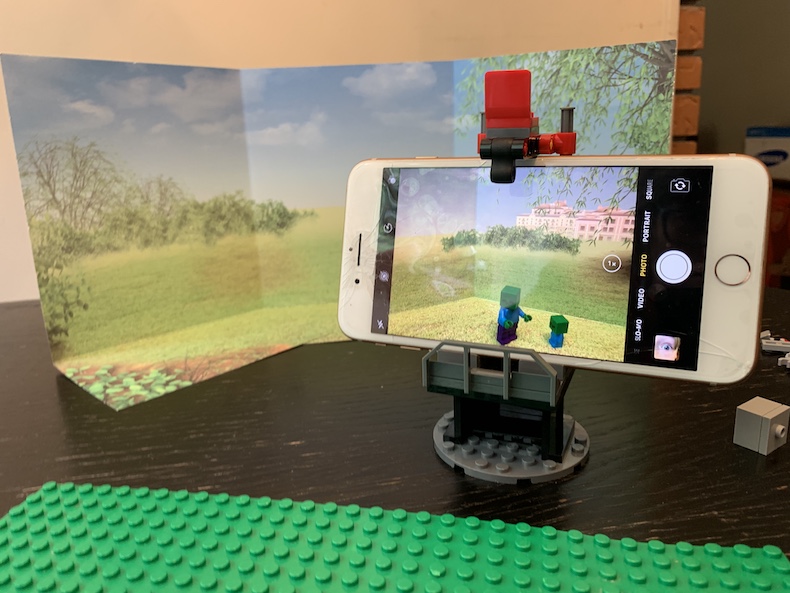
… and filmed a stop motion movie. We brainstormed and experimented with blocking and special effects. My young student’s huge assortment of lego helped with this, along with scene backdrops in the Klutz: LEGO Make Your Own Movie book and all sorts of items in the LEGO Movie Maker Building Kit (which he’d got for his birthday), from which we learned how to build an adjustable stand for our camera (aka smartphone).

This image has an empty alt attribute; its file name is Backdrop-and-Camera-Stand.jpg
Utilizing one of the backdrops and our newly built camera stand.

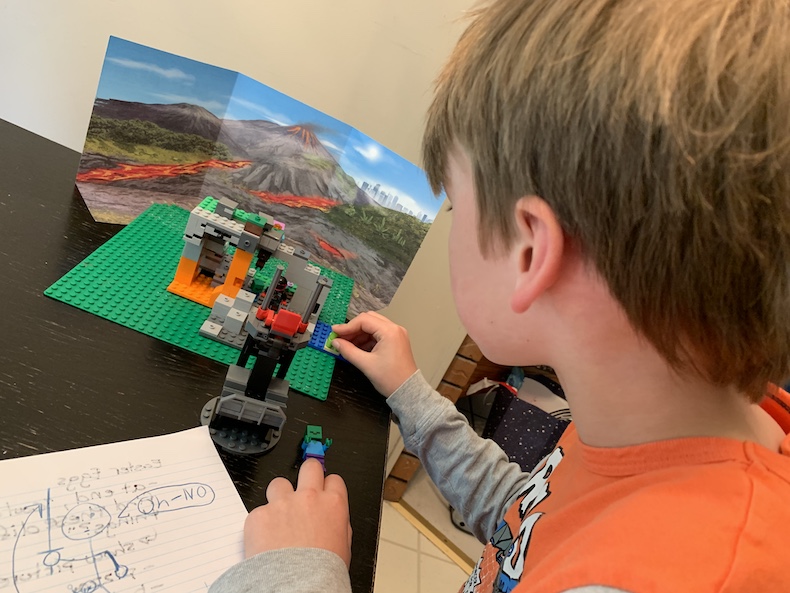
Finally my young student troubleshot how best to record the various voice overs for the project, and he and I will eventually edit the stop motion film together – that piece we did not get to on-set, so are planning to get together to finish in the not so distant future. Lego does have a free movie making app to help with the editing process, called Movie Maker, but we decided to use iMovie for this, as earlier on the set, my young student had shot his first documentary and I’d taught him how to use iMovie to edit it.

This image has an empty alt attribute; its file name is Setting-up-for-a-new-scene.jpg
Setting up for a new shot.

I have to say, this was a lot of fun, and something I could see wanting to incorporate into my school, if I still taught in a school. With this, I could see this being a full language and media arts project, a station set up in the classroom for kids that finished their other work early, a makerspace activity, or an after school club. It is also a fun at home activity, as well as a great project for homeschoolers. I myself am now looking for excuses to play with making lego stop motion movies in our work – possibly in future tutorial videos for StoryToGo or for one of my Master of Educational Technology videos. My young student kindly gifted me the LEGO Movie Maker Building Kit, and I am going to buy the Klutz: LEGO Make Your Own Movie book for myself, my nieces and nephews, and a few of my friends’ kids, as this really is such a fun experience. I can see why Lori was so fascinated by her visit to the Laika Studios and learning about stop motion storytelling there.

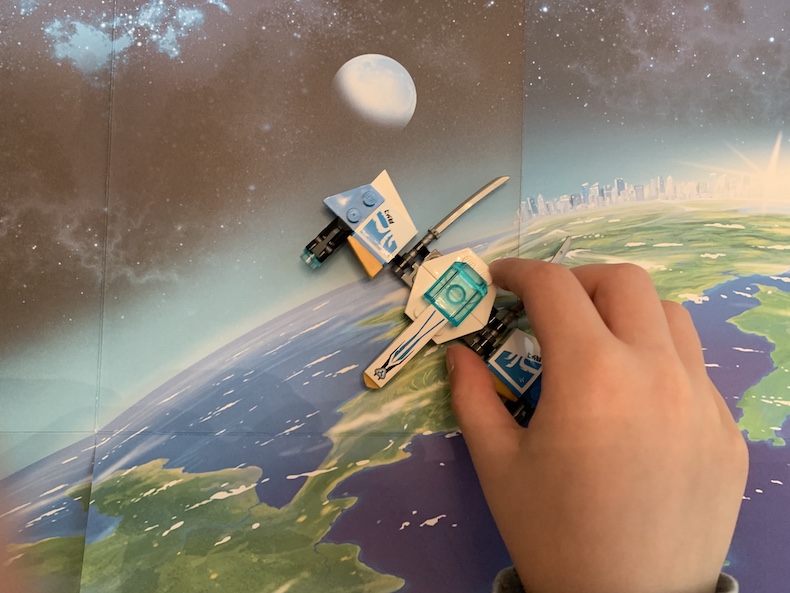
This image has an empty alt attribute; its file name is flying.jpg
Using one of the backdrops to create the perception of flight.

If lego stop motion or stop motion in general is something that you’ve been having fun experimenting with, I’d love to hear any tips and tricks you may have, and to see your videos, if you want to drop your thoughts and links in the comments below. And if you have been creating lego stop motion or stop motion videos with your students, whether in traditional school or homeschool settings, I’d love to hear about how and what is working for you and your students, in the comments below.

Thanks! I hope you have fun with this!

Filed Under: #StoryToGo, Erica Hargreave, Our Community, Storytellers, Student Stories Tagged With: filmmaking, stop motion, storytelling

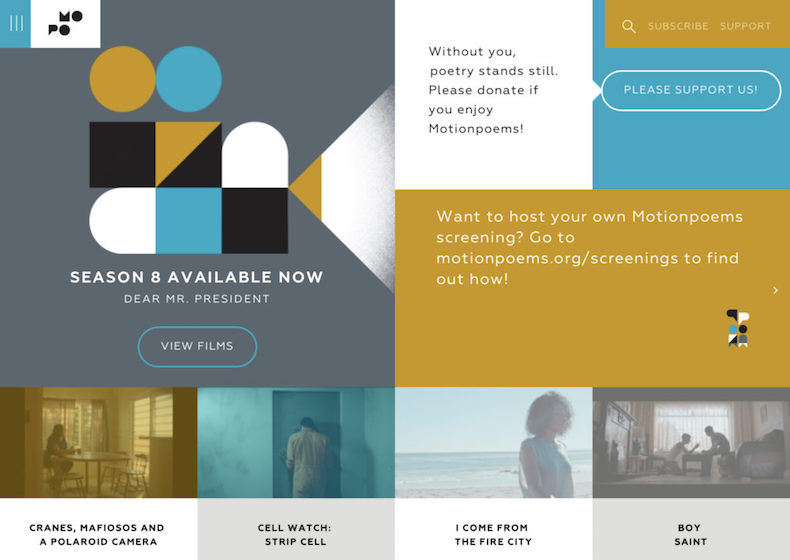
Motion Poems – a Sustainable Funding Case Study

May 23, 2019 by Mary McDonald Leave a Comment

A match made in creative heaven.

Motion Poems is a non-profit dedicated to the creation and free distribution of “motion poems” — poetry films. Motion poems started with animator Angella Kassube and poet, Todd Boss. Angella approached Todd after a poetry reading and said she would love to animate one of his poems. 

It took me half a second to say, Sure! I’ll send you everything I’ve ever written.  Within a week and a half she came back with all of these cool drawings and ideas.

Todd Boss

Motion Poems began as a self-funded collaboration between a poet and an artist, then branched into a matchmaking service for artists and poets to connect and collaborate. Todd Boss, Co-founder Executive and Artistic Director could see great potential in growing the genre of “motion poems” and embarked upon the route of setting up a non-profit organization to make this happen.

Creators: 

Todd Boss — Co-founder, Executive, Artistic Director

Country:

Minneapolis, Minnesota, US

Interview Date:

March 12, 2019

Link to Project:

Motion Poems

Funding and Business Model:

501c non-profit managed by a Board of Directors with the co-founder, executive and artistic director, Todd Boss

The Creators:

Motion poems started with Angella Kassube and Todd Boss. They met when Todd was reading his poems at a poetry reading.  Angella approached him afterwards and said she was an animator and would love to animate one of his poems. “It took me half a second to say, Sure! I’ll send you everything I’ve ever written.  Within a week and a half she came back with all of these cool drawings and ideas.” 

Together, the pair started the project as a “matchmaking service” — she reached out to animators and filmmakers and he reached out to poets to see who wants to play.

Todd came from a non-profit arts administration background and so saw the value and potential in having a wider impact of developing motion poems/poetry films as a genre. He wanted to formalize the project as a non-profit, get some funding, and be able to get themselves paid. Todd got the papers together, got a board together,  and gathered people with a background in non-profit experience to help guide and direct them. They were fortunate and landed some big grants right away. Angella is not as much involved in the project currently. She was not interested in expanding and developing the project in this way. 

The Project:

Motion Poems is a non-profit organization that partners and collaborates with filmmakers, producers, for-profit and non-profit publishers and literary organizations and educators. They produce and freely distribute motion poems — films created as interpretations of poems. 

Motion Poems hires a guest producer each season and partners with publishers and literary organizations to obtain free rights to the poems. Filmmakers are offered a small stipend of $1000 per film, although they hope to be able to offer more to filmmakers in the future. They also create lesson plans in-house which they freely share. On their website, they share lesson plans created and sent in by teachers who utilize their poetry films as educational resources as well as films created by students.

Todd explained that each guest producer, always a woman, brings her own ethos to the project, reaching out to her filmmaking community. “This is a way of keeping things fresh and new and changing and expanding their roster each year.” They also partner with new publishers and literary organizations each year. With the material they gain access to through these partnerships —  “we shovel the poems out to the filmmakers — dozens and dozens until they fall in love with something.”

The filmmakers have full creative control over the films. It’s always a surprise for the poet, usually not a good surprise, which we prepare them for. But it’s a gamble they are willing to take. It’s one person’s interpretation, not a translation of the poem.

Todd Boss

Angella, co-founder with Todd, envisioned a project and place where artists and filmmakers could express themselves creatively. Filmmakers and animators often have to support themselves with daily jobs which don’t allow them to have full creative direction. Motion Poems offers this creative space. 

Filmmakers go to art school, filmmakers are artists, but in the necessary jobs they do day to day, the creative direction isn’t theirs, it’s from the client, to the client, for the client…and it drains the soul from their artistic practice. MP gives them full creative control.

Todd Boss shares Angela’s secret

Filmmakers are given a small stipend of $1000 which Todd acknowledges is nowhere near enough for the creative resources they are pouring into it, but it’s at least a little bit. They have hopes to someday be in a position to be able to pay the filmmakers more. MP puts on an annual premiere for them, promotes them through the monthly launches and through their Facebook. Poets walk away with a film, exposure, and people who have engaged with their work. MP gives the filmmakers access to a poem as script which is rights free and that’s really important to them. MP has tapped into a need, a creative need for filmmakers. Every week, a filmmaker is reaching out to Todd to collaborate with them. 

Into the Future — New Ventures

Poetry will always be at the core of what we do — it’s surprising/unexpected that it’s poetry that has worked as the core of these ventures.

Todd Boss

This is a transition year, Todd said, shifting from what they have always done which is creating films. They are going to continue creating films but are now branching out into public art. 

They’ve created an app, in partnership with a local media company who’s very excited and interested to partner with them and their innovative ideas. MoVA is a moving virtual art museum for the rapid transit line in Minneapolis-St. Paul. During the ride, viewers can hold their phones to the windows. In this AR experience, viewers will see what they could be passing, what they could be seeing out the window — artworks bigger than can fit in a museum. 

Motion Poems is putting out the call soon to artists for innovative, creative art for this initiative. “It’s not a difficulty of partnering with artists and having to tell them what to do, the artists will come up with the wonderful ideas, it’s just a matter of partnering with great artists.” 

Todd Boss

They are hoping to launch the app this summer. This venture came from the project, Chaos on the Green Line which was a VR experience using Google Cardboard. During the ride, the GPS triggered the Virtual Reality experience and you moved through it, virtually in a 360 environment. That was highly intensive. 

MoVA is an AR experience. Todd has reached out to the local art museums, hoping to partner with them so that someday, “this line is sponsored by this museum”…. As Todd envisions it, the museums could use these as annexes for artwork that is bigger than can fit into a gallery. Todd feels this experience could expand beyond this rail line . “Flip the right switch and this could work on a New York transit line”. 

Other smaller new ventures

Hot House — a 48 hour pairing of 4 poet/filmmaker teams. This initiative was funded through a Kickstarter campaign. Teams were challenged to create a moving poem within that time frame.

It’s an effort to capture some of the thrill and the surprise of the collaboration that happens between poet and filmmaker.

Todd Boss

Eppy awards — first ever Epiphany awards. Poetry filmmakers from outside Motion Poems collaborations have been invited to submit up to 3 films each. Six prizes of $500 each will be awarded in three commentaries — adaptation, innovation, production. 

It’s a shift year, not sure in the end which initiatives will turn out to be the most sustainable, most successful ventures.

Todd Boss

Road to Sustainable Funding

Todd has learned that it’s Important to have a diverse mix of funding — corporate, foundation, personal, earned income.

It’s a constantly evolving, changing landscape, it’s important to be able to pivot and reach out to new partners and opportunities.

Todd Boss

He notes, It’s always a struggle to keep enough money coming in — “Priorities change, it’s a challenge in contested election periods, year after year,… and with natural disasters and humanitarian crises, people are giving money to those causes of course”(Todd Boss).

Todd has found that it’s easier to get funding for new initiatives — grants for flashy, sexy big immersive and augmented reality projects. It’s an ongoing struggle to maintain operating costs. 

Diverse Mix of Funding

Recently, they have been able to get earned revenue from consultations and speaking, which is increasing the organization’s sustainability. In addition, they have a support button and a list of their donors on the website.

Funding partners include state, corporate sponsors, foundation grants, arts organizations and personal donations. Motion Poems is funded, in part, by an appropriation from the Minnesota State Legislature with money from the State’s general fund. They list sponsors of specific seasons: 

“Season 5 is sponsored in part by contributions from HDMG, Gentleman Scholar, The Mill, and MPC. Season 6, an all-female-poet season, is sponsored by VIDA: Women in the Literary Arts. Season 7 is sponsored by Cave Canem.”

Major Funding Contributors

Horncrest Foundation, John S. and James L. Knight 1Foundation, Lowertown Future Fund, MRAC, Saint Paul Foundation, Springboard for the Arts, St. Paul Cultural STAR, Toro Foundation

They charge admission for the premieres. Locally, they have been able to co-host their premieres with the Walker Art Center, and the Minneapolis-St. Paul International Film Festival, thus able to present at these galleries for free.  But in New York that’s  been more challenging for an outside organization to find a venue.

In LA, is where many of the guest producers come from and where many of the filmmakers come from. They run crowdfunding campaigns. “hey, help us share these films with the world” They’re able to raise money, rent a big warehouse, have catering and host a party.

Todd Boss

They sell screening packages to organizations wishing for Motion Poems to provide a themed curated program of the films with promotional materials.

Currently MP is in the process of revamping and recruiting for an expanded Board. Up to now, they’ve had a basic Board of 6 to 8 members with non-profit, foundation experience.

We would like to have the people we haven’t had — corporate members, legal members, philanthropic members —  these are the people they would like to have around the table. The greater their collective capacity, the greater Motion Poem’s capacity.

Todd Boss

Why Free Access? 

As a non-profit, they are always thinking about access to the work and who is able to access it. And, as Todd says, “there’s the instinct to share, a childish instinct to say, ‘see, look what I made’” and you want to get the work out to as many people as possible.

As a poet, Todd recognizes that there isn’t a commercial market for poetry.

There is no precedent for motion poems, it’s a new, hybrid form. Need to show people that poetry can be transformed in this way, into a film, get people interested. You can’t charge them for something they don’t know what it is.

Todd Boss

Todd hasn’t come from a background where he has been aware of Open licensing or Open Educational Resources. Motion Poems has been built upon a foundation of primarily free access.

Free Educational Resources

As Motion Poems gathered a following, they found that college teachers, poetry teachers  were reaching out to them, telling them how powerful their films are for teaching poetry. Sara, their communications person has an education background so she wrote lesson plans that are freely available. It is important to MP to make their material as accessible as possible to educators — at the high school, early college and grad school level. Creating a motion poem is a deep read of a poem, a personal interpretation, an adaptation. They designed a curriculum for creating motion poems for grad school. Student created poems created from the lesson plans are linked to the website, and teacher initiated lessons and suggestions are welcomed and shared on the website as well.

This is a transition year, shifting from what they have always done, creating films. They are going to continue creating films but are now branching out into public art. 

They’ve created an app, in partnership with a local media company who’s very excited and interested to partner with them and their innovative ideas. MoVA is a moving virtual art museum for the rapid transit line in Minneapolis-St. Paul. During the ride, viewers can hold their phones to the windows. In this AR experience, viewers will see what they could be passing, what they could be seeing out the window — artworks bigger than can fit in a museum. 

Keys to Success to Carry Forward: 

Todd explained that he is always learning, always taking forward what he has gained from/learned from in developing Motion Poems. They have a new, separate initiative of collaborating with composers and poets. He will take into that what he has  learned from developing  Motion Poems.

Artistic freedom for the artists — tapping into that creative need of artists is powerful.

Collaboration — vision of collaboration is essential. Todd hopes that that would continue beyond himself as Executive and Artistic Director. 

Collaboration is not an intuitive process for most, you learn by doing. Powerful  sparks come from collaboration.

Todd Boss


Filed Under: #StoryToGo, Case Studies, Mary McDonald, Storytellers, Sustainable Funding Tagged With: filmmaking, poetry, sustainable funding

« Previous Page
Next Page »

Primary Sidebar

#StoryToGo is a community designed to reflect storytelling today – shared both through traditional means of oral storytelling, radio, film and TV, and print; in addition to newer forms of media storytelling through the digital arts, including gaming, blogging, online video, and social media.

Explore Past Posts


Tags

accessibility AI for filmmaking AI for videography AR art art therapy art therapy activities augmented reality BCIT clown crowdfunding crowdsourced Elementari elevator pitch Extended Reality FilmFreeway filmmaking game game based learning game design game development health and wellness home education improv inclusive design literacy NFT non-fungible tokens online learning open education phishing scam photography pitching poetry social media storytelling storyworlds sustainable funding universal design video game virtual conference virtual reality Web Monetization XR XR Development

On the Beat with StoryToGo

Follow along on StoryToGo’s digital magazine for our latest case studies, upcoming free courses and webinars, technology tips and tricks, story musings,  and our latest job boards!

  • Case Studies
  • Tech Tips
  • Events
  • Jobs
  • Our Community
  • Courses

Copyright 2012 © 2026 · Ahimsa Media · Log in