• Skip to primary navigation
  • Skip to main content
  • Skip to primary sidebar

StoryToGo

Exploring storytelling in its many forms in this digital age

  • Our Story
    • Our Creatives
    • Join the StoryToGo Community
  • Community Resources
    • Web Monetization Guide
      • Web Monetization Resource Library
        • Web Monetization Tutorials
        • Web Monetization Research Papers
        • Interviews and Case Studies on Web Monetized Projects
      • Web Monetized Content Library
        • Web Monetized Courses
        • Web Monetized Podcasts
        • Web Monetized Social Networking Platforms
    • Podcasting with my Cat
      • Sustainable Funding Series Vlogcast
      • Encounters in EdTech Podcast
      • The Creative Farm Podcast
      • Boma Global Studios Podcast
    • Job Board
    • Storytelling Case Studies
  • Digital Magazine
    • Accessibility
    • Art Therapy
    • Blogging
    • Case Studies
      • Analyst Report
      • Extended Reality
      • Sustainable Funding
    • Community Building
    • EdTech
    • Gaming
    • Immersive and Interactive Media
      • XR
    • Performance Arts
      • Acting
    • Social Media
    • Storytellers
      • Alex Charters
      • Bjorn Yearwood
      • Erica Hargreave
      • Henry Hargreave
      • Jennifer Rose Garcia
      • Lori Yearwood
      • Mary McDonald
    • Tech Tips
    • Web Monetization
  • Professional Development
  • Calendar
  • Contact

Erica Hargreave

Ringing in 2020 with Storytelling and Digital Media Courses at BCIT

January 1, 2020 by Erica Hargreave Leave a Comment

As we ring in a new year, it had me reflecting on what is important to me, and this old proverb …

Give a man a fish, and you feed him for a day. Teach a man to fish, and you feed him for a lifetime.

Photographed by Cristian Palmer, care of Unsplash.

There is no greater gift that you can give yourself or another than learning a skill that helps pursue one’s passions. This is the reason why sharing knowledge is an important part of what we aim to do here with StoryToGo.

The Importance of Sharing Knowledge For Us

When I started speaking in 2008 about bridging the worlds of media, interactive and cross-platform storytelling, and digital media, it occurred to me that while inspiring people through my talks was great and all, to truly help people to take action, they needed a course giving them guidance and support while they build and craft their storyworlds.
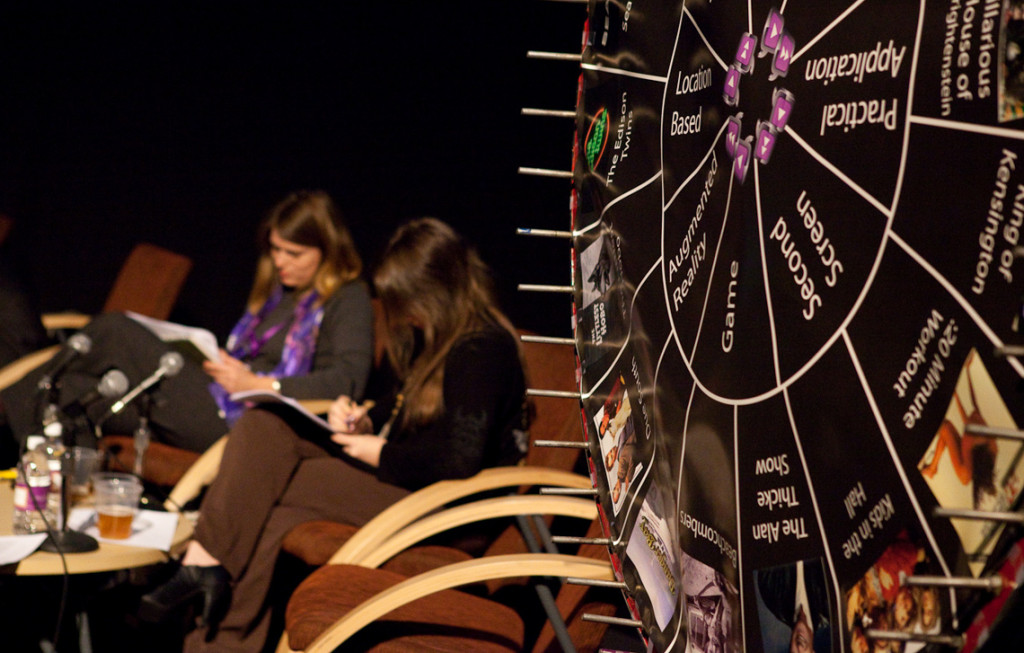
Interactive Storytelling
Erica Hargreave and Caitlin Burns on a Panel on Convergent Storytelling.
Photographer: Liz Kearsley

A year later, after pitching the local post secondary schools, my first post-secondary school courses launched at BCIT and Capilano University. Since then my team and I have also built courses and workshops and taught community, undergraduate and graduate courses at Ryerson University, Humber College, and NVIT. In addition, we’ve helped build new programs and revise old programs. It has both been an honour to teach and share with others, and fulfills a passion of ours. We love teaching.

Creating Our Courses Online

In 2011, after speaking in Egypt, we recognized that to truly make a difference to people that could most benefit from our courses, we needed them to be available online.
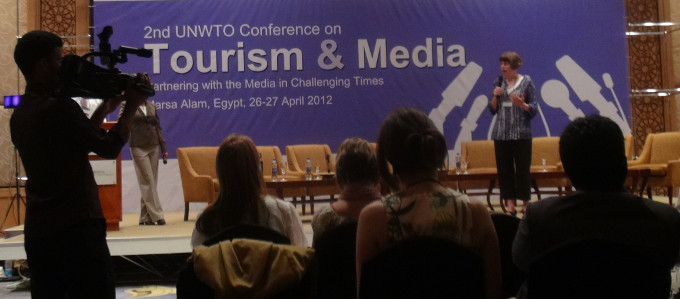
Erica Hargreave speaking on ‘Real Time’ Storytelling at the UNWTO Conference on Working with Media in Challenging Times in Marsa Alam, Egypt.

Thanks to BCIT and our colleague Kevin Ribble, they were by 2013. This has also allowed Lori Yearwood to help build and teach those courses with me.

2020 Courses at BCIT

I am happy to share that as we move into 2020, we now have 2 online post-secondary credited courses and 2 intensive community courses offered through BCIT’s Broadcast Media and Communications Part Time Studies. All of our courses are project based, in which our students come out of them having built or built upon projects of their own that they are crafting for their future endeavours.

For those of you who are looking to give yourself and someone in your life the gift of learning this year, these are a few of the courses that we will be teaching in 2020:

  • BCST 1073 – Building Your Digital Media Presence (an online, work on your own schedule each week, course starting in January)
  • BCST 1193 – Social Media Storytelling (an online, work on your own schedule each week, course scheduled to be offered in April)
  • BCST 0107 – Travel Writing: Your Journey from Branding to Monetizing your Travel Stories (stay tuned for a Summer intensive course offering)
  • BCST 0108 – Creating and Marketing your Own Web Series (stay tuned for a Summer intensive course offering)

Photographed by Ian Schneider, care of Unsplash.

More Coming on StoryToGo

Also keep your eyes peeled here as we will be launching the StoryToGo Classroom site later this year with mini online courses, and tailored online and blended courses for organizations from us and our rich group of storytelling friends and colleagues.

If you have a course that you would love to see offered through StoryToGo, please let us know in the comments, and if you wish us to tailor create a course for your organization, please send us an email.

Photographed by by Danielle Macinnes, care of Unsplash.

Raising a glass of whatever your preferred beverage to a happy and rewarding new year and new decade, rich in learning!
Filed Under: #StoryToGo, Courses, Erica Hargreave, Events, Instructor News, Our Community, Storytellers Tagged With: BCIT, storytelling, storyworlds

Learning Stop Motion Filmmaking With Lego

August 21, 2019 by Erica Hargreave Leave a Comment

As some of you may have guessed, we wear many hats. We are storytellers, educators, technologists, scientists, dancers, and marketers. We love that the work we do allows us to put on those many hats, and enjoy the different experiences and facets of our work, including still getting a little bit of kid time with Ahimsa Kids.

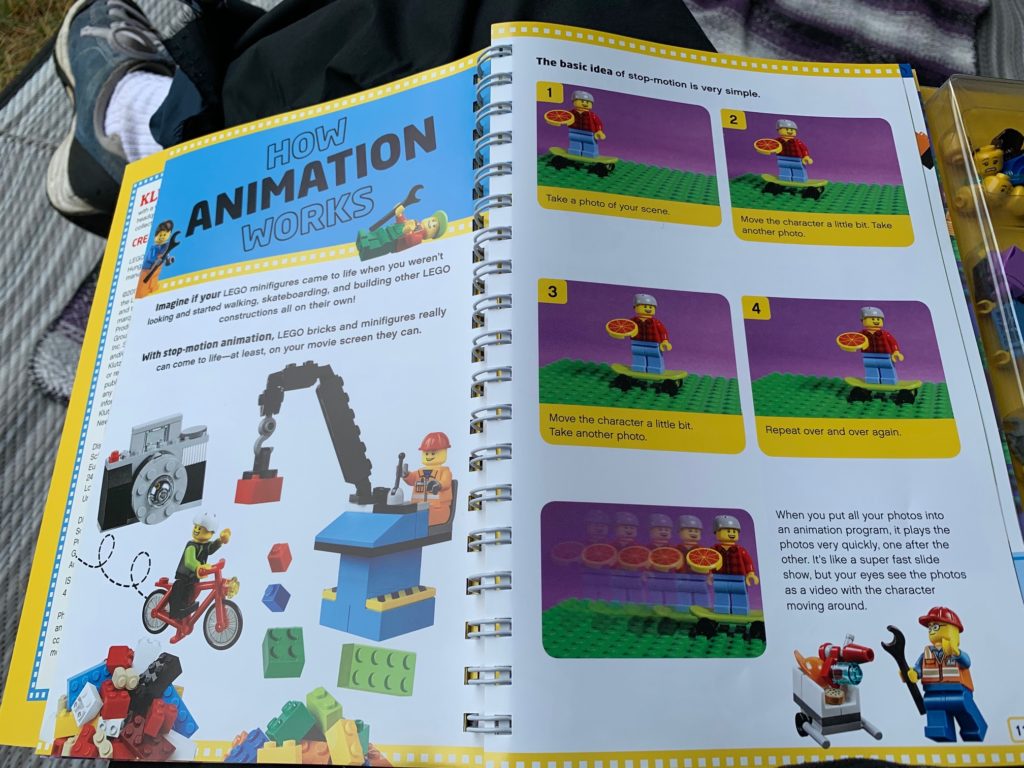
This image has an empty alt attribute; its file name is Lefo-Make-Your-Own-Movie.jpg
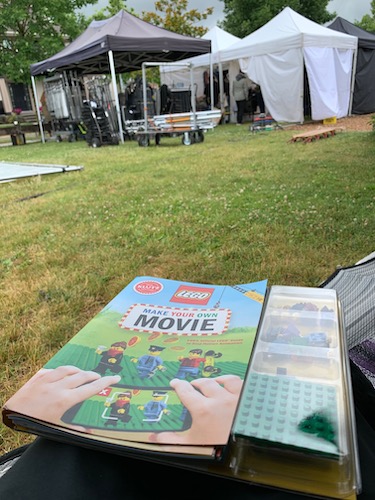
Loving this book.

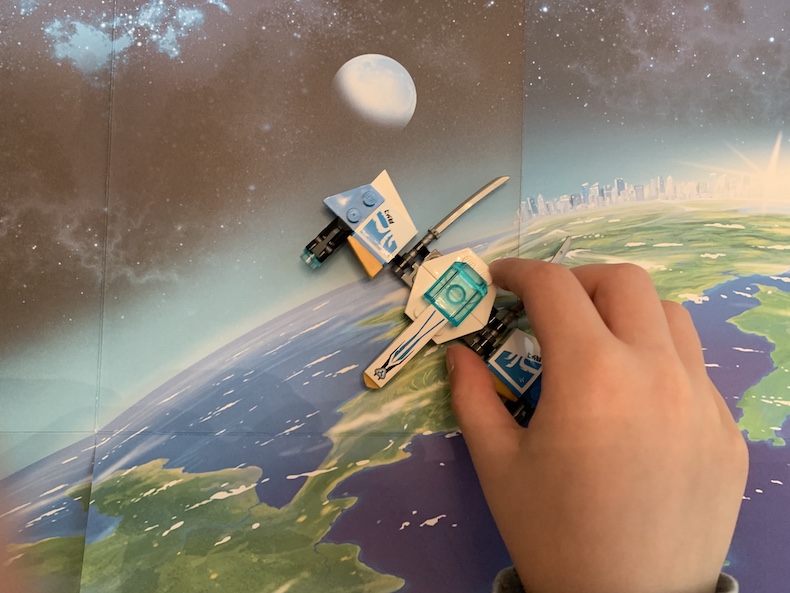
Recently with that, I had the opportunity to work with an intelligent and engaging 10-year-old, who once he finished his school work, we were able to dive into the world of edtech and stop motion filmmaking together. Stop motion is something he has a keen interest in, along with lego, and he’d just been given the Klutz: LEGO Make Your Own Movie book. It didn’t take long after flipping through the book, which was a 2018 Toy of the Year finalist, for me to become just as hooked as he was on the process. So the two of us embarked on making our own first stop motion lego film together.

This image has an empty alt attribute; its file name is How-Animation-Works-1024x768.jpg
Leafing through the pages.

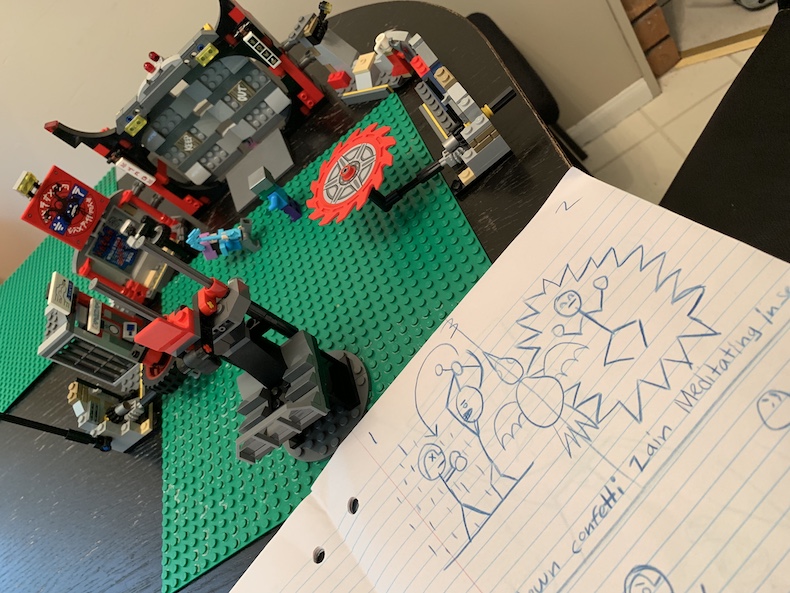
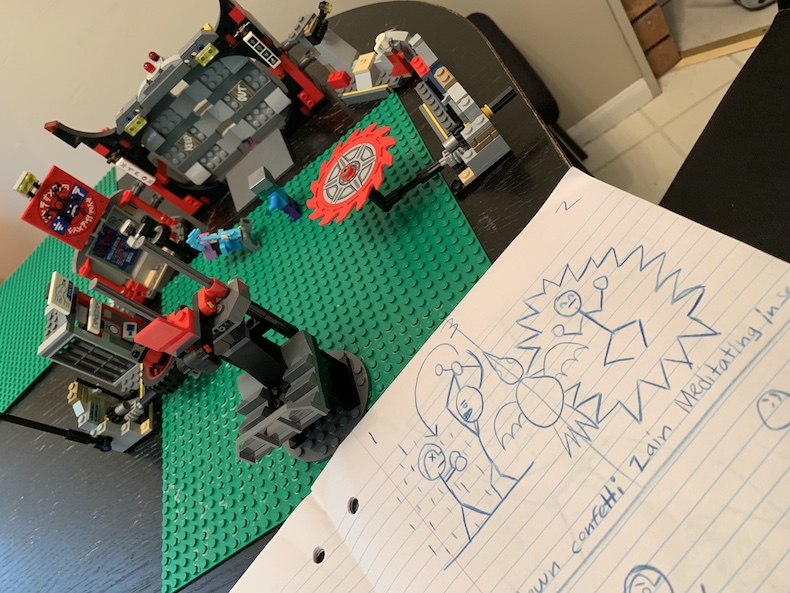
This was a fun cross-curricular project to embark on. In the process, my young student developed and wrote a story, learned to storyboard …

This image has an empty alt attribute; its file name is Storyboarding.jpg
Laying out a scene from the storyboard.

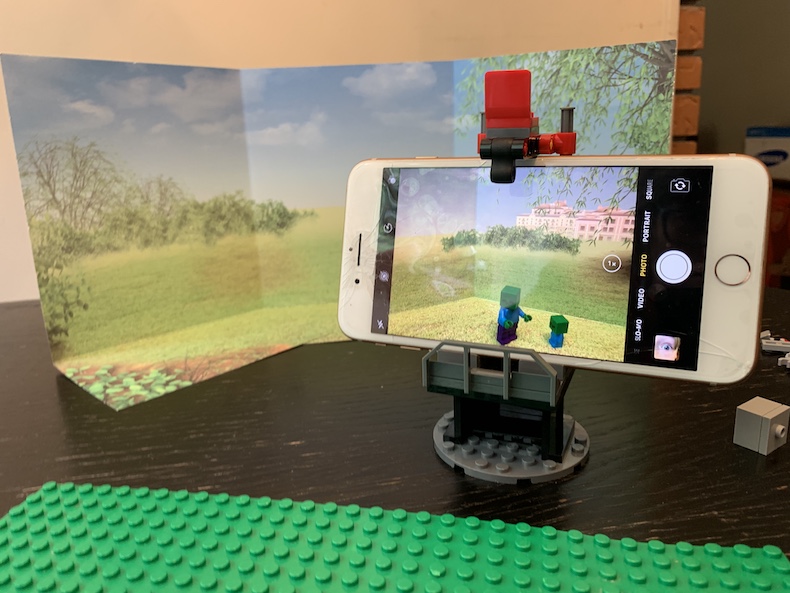
… and filmed a stop motion movie. We brainstormed and experimented with blocking and special effects. My young student’s huge assortment of lego helped with this, along with scene backdrops in the Klutz: LEGO Make Your Own Movie book and all sorts of items in the LEGO Movie Maker Building Kit (which he’d got for his birthday), from which we learned how to build an adjustable stand for our camera (aka smartphone).

This image has an empty alt attribute; its file name is Backdrop-and-Camera-Stand.jpg
Utilizing one of the backdrops and our newly built camera stand.

Finally my young student troubleshot how best to record the various voice overs for the project, and he and I will eventually edit the stop motion film together – that piece we did not get to on-set, so are planning to get together to finish in the not so distant future. Lego does have a free movie making app to help with the editing process, called Movie Maker, but we decided to use iMovie for this, as earlier on the set, my young student had shot his first documentary and I’d taught him how to use iMovie to edit it.

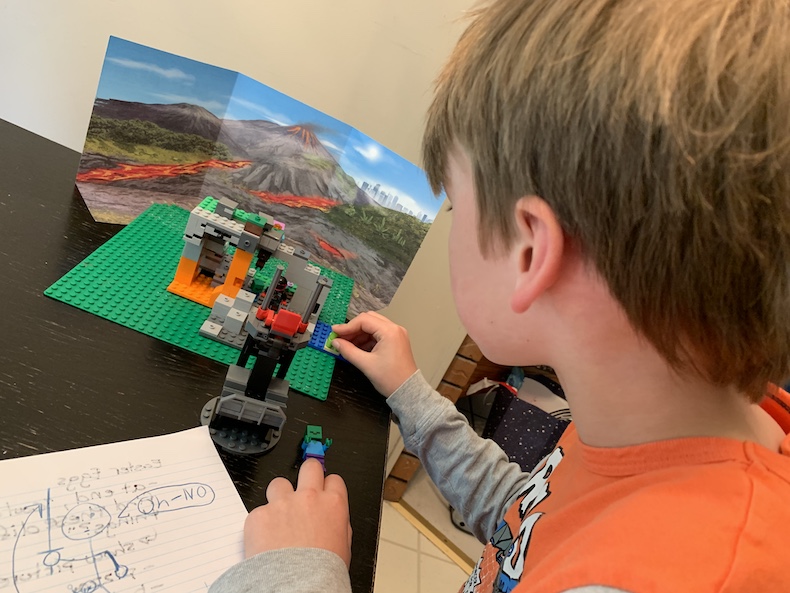
This image has an empty alt attribute; its file name is Setting-up-for-a-new-scene.jpg
Setting up for a new shot.

I have to say, this was a lot of fun, and something I could see wanting to incorporate into my school, if I still taught in a school. With this, I could see this being a full language and media arts project, a station set up in the classroom for kids that finished their other work early, a makerspace activity, or an after school club. It is also a fun at home activity, as well as a great project for homeschoolers. I myself am now looking for excuses to play with making lego stop motion movies in our work – possibly in future tutorial videos for StoryToGo or for one of my Master of Educational Technology videos. My young student kindly gifted me the LEGO Movie Maker Building Kit, and I am going to buy the Klutz: LEGO Make Your Own Movie book for myself, my nieces and nephews, and a few of my friends’ kids, as this really is such a fun experience. I can see why Lori was so fascinated by her visit to the Laika Studios and learning about stop motion storytelling there.

This image has an empty alt attribute; its file name is flying.jpg
Using one of the backdrops to create the perception of flight.

If lego stop motion or stop motion in general is something that you’ve been having fun experimenting with, I’d love to hear any tips and tricks you may have, and to see your videos, if you want to drop your thoughts and links in the comments below. And if you have been creating lego stop motion or stop motion videos with your students, whether in traditional school or homeschool settings, I’d love to hear about how and what is working for you and your students, in the comments below.

Thanks! I hope you have fun with this!

Filed Under: #StoryToGo, Erica Hargreave, Our Community, Storytellers, Student Stories Tagged With: filmmaking, stop motion, storytelling

‘Monetizing Your Storytelling Content’ Panel – What Would You Ask Them?

March 7, 2019 by Erica Hargreave 2 Comments

Erica Hargreave

I am greatly looking forward to moderating a panel this coming Saturday, March 9th, 2019 at the British Columbia Travel Writers Symposium on ‘Monetizing Your Storytelling Content’.

Building sustainable funding models around storytelling projects is a topic that I am researching and exploring at the moment for a Master’s project with Mary McDonald (and some non-Master’s help from Lori Yearwood). Our plan is to give StoryToGo a much needed redesign and share the Case Studies in Sustainable Funding Models for Storytelling here in the StoryToGo Community, with all of you.

Saturday’s panel features three smart and successful storytellers and entrepreneurs from Vancouver’s travel media community. They include Vancouver blogger Miss 604 Rebecca Bollwitt (who is a pioneer in turning blogging into a business), popular YouTuber Josh Rimer (who also happens to be Mr Gay Canada 2019), and cross-platform storyteller Claudia Laroye The Travelling Mom (who has successfully bridged the worlds of traditionally and digital media in her storytelling).

So this brings me to my question to you, what questions would you ask these three around monetizing your storytelling content and building a sustainable funding model behind your storytelling?

Looking forward to your thoughts and including what I can into the panel. I will be sharing what we learn from our panelists over here at StoryToGo in the coming weeks.

Filed Under: #StoryToGo, Erica Hargreave, Events, Storytellers Tagged With: monetize, monetizing, sustainable funding, travel writing

Snapchat: Disrupter of Traditional and Social Media? Should We Care?

September 2, 2016 by Erica Hargreave Leave a Comment

This article was originally published in Reel West Magazine, and was republished here to archive it, after the close of the magazine.

I’ll admit it – initially, I did not care about Snapchat. In it’s early days, it was known as the sexting app – mainly because the text and drawing editable photo and video messages disappeared after viewing them.  Call me a prude, but the idea of someone sending me their homemade porn was far from appealing.  And in the event that the guy wanted to send me flirtatious messages then my romantic side questions why I’d want to use an app in which our playful banter disappeared.

So why then am I now brainstorming ways of using Snapchat on our future projects and experimenting with different forms of storytelling content on it?

Well, in case you hadn’t heard, Snapchat has become mainstream. For the same reason why Snapchat became popular as a sexting app, has also made it popular with teens experimenting with social media, and parents who wish a safer environment for their teens and preteens to ease their way into social sharing. Namely, in that the pictures and videos disappear, so what you share in the moment, remains in the moment, and is not something you have to worry about how other people will interpret later in life or resharing and finding elsewhere on the web. Also refreshingly, its an app with no competition for likes or followers.

Why should we care about any of this? Well, because Snapchat has become THE Platform for connecting with teens and millennials – even more so than Instagram. It is in fact, currently the fastest growing social network of millennials.

What caused this increase in popularity? A few things. First was the release of ‘stories’ in 2013, which allowed users to make their snaps viewable over a 24-hour period with all their friends or even with everyone on Snapchat. Then in 2015, Snapchat released 2 major game changers. The first was the addition of Discover – Snapchat’s version of broadcasters with broadcast partners like MTV, National Geographic, Comedy Central, Food Network, and VICE; magazines like Cosmopolitan and People; and digital media sources like BuzzFeed and Mashable, all hosting their own Snapchat broadcast channel. These broadcast partners provide content and even mini-series that people can only watch on Snapchat. Interestingly enough, the fact that viewers can only watch the content once – much like television historically, is why Snapchat users are tuning in daily, so as to avoid the ever scary millennial FOMO (Fear Of Missing Out). Snapchat’s second big release in 2015 was the release of their lenses – that turned selfies into selfie pooches, bumblebees, made you spew rainbow vomit, and the likes. Admittedly, this is when I started paying more attention to Snapchat as my colleagues started sharing crazy fun Snapchat selfies, and I watched the hair, makeup and wardrobe team on set experimenting with different lenses and snapping snapchat selfies with the cast.

In asking friends that are avid snapchatters what appeals to them about it, here is what I was told:

It’s storytelling for the sake of storytelling. … It’s more real, not making photos look perfect like on Instagram, or composing happy looking or possibly staged shots for Facebook. … It’s nature is more playful.

Digital Storyteller Lori Yearwood

I love the ephemerality of everything … but that’s why film and tv people struggle with it, there aren’t engagement metrics, comments, etc. that they can link to later.  

ARG Strategist Steve Peters

So what does this mean in terms of your productions and projects? How can Snapchat be used in your web series, TV series or film endeavours?  According to Marketing Strategist and Writer Abdaraouf Douai, “Fans adore behind the scenes, teasers and sneak peaks. Always leave them wanting more!”, while Steve Peters is “interested in it from a storytelling perspective, if it’s used organically within a fiction.”

Ultimately, I think the key is diving in and having fun playing with it. Audiences expect what they find on Snapchat to be rawer and unscripted.  In fact, that is part of what they like about Snapchat – the fact that it feels more real. And as the content disappears after you’ve watched it once, it provides a great platform for sharing teasers during filming, and now (thanks to the addition of the ‘Memories’ feature on Snapchat) previously shot content can be shared leading up to broadcast of your web series, TV series or film. As cast and crew are already entertaining themselves with Snapchat in their downtime on set, it could be a great way to engage fans more organically from set with behind the scenes fun from the cast and crew, purposefully sharing some hints and rumours from filming.  Thanks to the temporary nature of the content, it restricts the spread of spoilers – which so many productions worry about with cast and crew content shared on other social media platforms. I can also see it being used for extras to compliment a web series, TV series or film, but which are not a direct part of the production – mini-web series on the periphery, with a rawer, more reality based feel. These should be something that viewers can only get on Snapchat. It also holds potential as a great platform for creating and releasing gaming or contest related content – in which fleeting clues are released daily, encouraging the community to view daily, before the clue disappears forever. 

Whichever way you decide to use Snapchat, the key is to have fun, as that is ultimately what Snapchat is all about! We’d love to hear how you are using Snapchat on your projects. Tweet us about it at @AhimsaMedia or on the #StoryToGo hashtag!

Filed Under: #StoryToGo, Erica Hargreave, Social Media, Storytellers Tagged With: snapchat, social media

Did You Hire the Right Social Media Team for Your Project?

May 13, 2016 by Erica Hargreave Leave a Comment

This article was originally published in Reel West Magazine, and was republished here to archive it, after the close of the magazine.

The ‘Social Media Expert’ or ‘Consultant’ has become a shingle that too many people are hanging on their door, and I have seen too many productions miss an opportunity by hiring the wrong social media team.

Why does it really matter?  Why can’t we just use the free intern to do our social media for us?

Well, in case you haven’t noticed, the media landscape has changed.  Social media has become increasingly popular with our audiences and with brands.  Why does this matter?  Because …

  • The film and television funding model is changing. Brands are increasingly moving their advertising dollars away from traditional television to digital and social media.  
  • The audience has an increasing number of choices for where to get their stories.  

If you are creating quality social media storytelling that is unique from the film, television or web series, and have built an engaged audience on social media, you are opening up your storytelling to other opportunities – both in terms of alternate sources of funding and alternate platforms for delivery.

So … did we hire the right social media team?

First, let’s look at what are NOT the qualifications to seek out for a good social media team:

  • grew up with social media
  • cheap (or expensive, for that matter)
  • friends with the broadcaster
  • have previously done social media for other film, television or web series
  • own or work in a marketing or PR firm
  • have social media accounts of their own

Now don’t get me wrong, any of the above individuals or teams could make for great social media storytellers, but they are NOT reasons for hiring someone for the job.

What does make for a good social media storyteller, then?

  • Someone who understands that they are augmenting your storytelling for the film, television or web series, and not simply marketing the show time or regurgitating exactly what has been said in the show.

Our audiences are more sophisticated than we give them credit for and they don’t enjoy being blatantly marketed to on social media.  It is important that those show times are shared, but in a clever way, and not where it is the predominant message being shared on social media.

  • They understand who your audience is, how to develop a ‘voice’ on social media that will appeal to that audience, where to find that audience online and how to engage that audience, so that they become invested in the film, television or web series.
  • They understand who your audience is, how to develop a ‘voice’ on social media that will appeal to that audience, where to find that audience online and how to engage that audience, so that they become invested in the film, television or web series.
  • They understand who your audience is, how to develop a ‘voice’ on social media that will appeal to that audience, where to find that audience online and how to engage that audience, so that they become invested in the film, television or web series.
  • They understand who your audience is, how to develop a ‘voice’ on social media that will appeal to that audience, where to find that audience online and how to engage that audience, so that they become invested in the film, television or web series.
  • They understand who your audience is, how to develop a ‘voice’ on social media that will appeal to that audience, where to find that audience online and how to engage that audience, so that they become invested in the film, television or web series.
  • They understand who your audience is, how to develop a ‘voice’ on social media that will appeal to that audience, where to find that audience online and how to engage that audience, so that they become invested in the film, television or web series.
  • They understand who your audience is, how to develop a ‘voice’ on social media that will appeal to that audience, where to find that audience online and how to engage that audience, so that they become invested in the film, television or web series.
  • They understand who your audience is, how to develop a ‘voice’ on social media that will appeal to that audience, where to find that audience online and how to engage that audience, so that they become invested in the film, television or web series.

Checking In: Is your Social Media Team doing it right?

While it is great to have your social media team evaluating and reporting the social media stats to you on a regular basis, this is time consuming work and shouldn’t come at the expense of the actual social media work – creating content, engaging the audience, and building community.  Limit this to every month or two, unless you are just looking for a bare basics email update, rather than a full report.

Also a few things to remember:

  • Connecting with your ideal community is more important than mass numbers.
  • Connecting with your ideal community is more important than mass numbers.

More importantly, do a check of your own to make sure the social media team is actually connecting with your desired community and not just their friends and spam accounts. To do this: look at the accounts they are following on instagram and twitter.  If they are mainly film industry, follow4follow, and major player / news accounts, then you have a problem – they are not actually connecting with your desired audience.

Ultimately at the end of the day, remember that your social media is an extension of your film, television or web series.  By doing the social media storytelling right, you can create opportunities for your project, and increase your leverage with brand sponsors and broadcasters.  Treat it with value.

For more of StoryToGo’s story and that of our community, connect with us on twitter at @AhimsaMedia and with the hashtag #StoryToGo.

Filed Under: #StoryToGo, Erica Hargreave, Social Media, Storytellers Tagged With: social media

Turn the Camera Outwards – Returning to Social Media’s Original Intentions

April 12, 2016 by Erica Hargreave Leave a Comment

This article was originally published in Reel West Magazine, and was republished here to archive it, after the close of the magazine.

Enough with the selfies already!  I cringed in 2013 when the Oxford Dictionary made ‘selfie’ the the word of the year.  This can’t bode well, I thought to myself, but I never predicted it would get as bad as it has.  Since then I’ve seen selfies at funerals and so many other inappropriate places.  I thought this had to be a fad … these people have got to clue into what self-obsessed prats they look, when picture after picture of their instagram feeds are all of them.  Don’t get me wrong, I love to see pictures of my friends and of the faces behind the stories I follow, but in moderation. 1 or 2 selfies for every 10 pictures, not 8 selfies for every 10 pictures, or 9 for 10, or 10 for 10!  Sadly this selfie obsession isn’t slowing down, it’s speeding up.  This year has seen the selfie obsessed reach an all time low – ringing in New Year’s Eve with selfies in front of a burning skyscraper in Dubai – causing two peacocks to die of fright at a zoo in China by grabbing them for selfies and violently plucking out their feathers – not to mention beach goers in Argentina killing a baby dolphin by passing it around for the selfie of a lifetime.  Hello people!  Do you not see something wrong with this picture???

Isn’t Kindergarten where we learn that it is not all about me! Well, guess what? The reality TV craze of the past few decades, in which we’ve transformed the Kardashians and Real Housewives of Wherever into the 21st century dream, has trampled over lessons learned. Leaving those poor Kindergarten teachers asking, “Where did I go wrong?”, as they pore another stiff drink.

They didn’t go wrong … rather we in the media did, by creating false idols and a celebrity crazed culture.  And it isn’t just traditional media that is to blame, as the internet and social media are what has allowed it to go viral.

Having created celebrities on the internet, I’ll let you in on a little secret … *it’s called social media for a reason.*  I created digital celebrities, by … wait for it … being social and using the digital celebrity I’d created as a conduit to shine a spotlight not on themselves, but on the communities around them.  Others tried to copy what I’d done and failed.  Why? Because they were actually trying to be a celebrity and create an ‘all about me universe’ for themselves.  Whereas I was creating a story and building a community.

In the broadcast world’s desperate race to figure out the web, we aren’t helping matters. By reporters trying to be ‘internet cool’ and using the lingo while snapping selfies, they’ve just made this idiocy more mainstream.  It is a sad state of affairs when as a broadcast journalism instructor, I have to explain to an aspiring journalism student that their instagram feed, filled with picture after picture of themselves, is telling the wrong story.  Journalism is about other people’s stories, not your own.  You need to turn the camera outwards.

The secret to success in the digital space that broadcasters are still struggling to figure out is not about broadcasting your message – it’s about being social – it’s about creating community.  If you want an audience to take a stake in your series or film and get them invested in making you a success – take an interest in them, engage with them (around their content, as well as your own), and shine a spotlight on them. From a budgeting perspective this also makes your digital media more cost effective, as you don’t need to create all the content yourself. Look at what your community is doing that is beneficial to your story and shine a spotlight on them. Of course to do this, you need to turn the camera outwards.

Please, please, please – don’t worry if everyone else is on snapchat, as it’s the latest fad, forcing you to share in the moment.  It’s okay not to spend your entire meal with friends filming their every bite, or rather than flying a kite with your niece and nephew, watching them do so through the camera lens. After all, if you’re spending your life observing the world through a camera lens (or in front of it, snapping selfies of your fabulous life), you are probably missing the story that is going on around you.

Don’t get me wrong, as storytellers we all make our livings looking through a camera lens, and we need to shoot the odd selfie to place ourselves within the story and to act as a conduit in connecting our audience with the community we are building a story around.  But for me, that will only be the odd shot of me, as I don’t want to miss the story going on around me – the story that actually makes my writing, my photos, and my videos that much richer.  So let’s raise a glass to our Kindergarten teachers and thank them for teaching us that it is not all about me, so that they may finally sit down next to us with pride and enjoy a pint!

As we at StoryToGo, love to turn the camera outwards and shine a spotlight on our community, we do hope you’ll join us online at @AhimsaMedia and with our hashtag #StoryToGo.

Filed Under: #StoryToGo, Erica Hargreave, Social Media, Storytellers Tagged With: photography, social media

« Previous Page
Next Page »

Primary Sidebar

#StoryToGo is a community designed to reflect storytelling today – shared both through traditional means of oral storytelling, radio, film and TV, and print; in addition to newer forms of media storytelling through the digital arts, including gaming, blogging, online video, and social media.

Explore Past Posts


Tags

accessibility AI for filmmaking AI for videography AR art art therapy art therapy activities augmented reality BCIT clown crowdfunding crowdsourced Elementari elevator pitch Extended Reality FilmFreeway filmmaking game game based learning game design game development health and wellness home education improv inclusive design literacy NFT non-fungible tokens online learning open education phishing scam photography pitching poetry social media storytelling storyworlds sustainable funding universal design video game virtual conference virtual reality Web Monetization XR XR Development

On the Beat with StoryToGo

Follow along on StoryToGo’s digital magazine for our latest case studies, upcoming free courses and webinars, technology tips and tricks, story musings,  and our latest job boards!

  • Case Studies
  • Tech Tips
  • Events
  • Jobs
  • Our Community
  • Courses

Copyright 2012 © 2026 · Ahimsa Media · Log in