• Skip to primary navigation
  • Skip to main content
  • Skip to primary sidebar

StoryToGo

Exploring storytelling in its many forms in this digital age

  • Our Story
    • Our Creatives
    • Join the StoryToGo Community
  • Community Resources
    • Web Monetization Guide
      • Web Monetization Resource Library
        • Web Monetization Tutorials
        • Web Monetization Research Papers
        • Interviews and Case Studies on Web Monetized Projects
      • Web Monetized Content Library
        • Web Monetized Courses
        • Web Monetized Podcasts
        • Web Monetized Social Networking Platforms
    • Podcasting with my Cat
      • Sustainable Funding Series Vlogcast
      • Encounters in EdTech Podcast
      • The Creative Farm Podcast
      • Boma Global Studios Podcast
    • Job Board
    • Storytelling Case Studies
  • Digital Magazine
    • Accessibility
    • Art Therapy
    • Blogging
    • Case Studies
      • Analyst Report
      • Extended Reality
      • Sustainable Funding
    • Community Building
    • EdTech
    • Gaming
    • Immersive and Interactive Media
      • XR
    • Performance Arts
      • Acting
    • Social Media
    • Storytellers
      • Alex Charters
      • Bjorn Yearwood
      • Erica Hargreave
      • Henry Hargreave
      • Jennifer Rose Garcia
      • Lori Yearwood
      • Mary McDonald
    • Tech Tips
    • Web Monetization
  • Professional Development
  • Calendar
  • Contact

Storytellers

Turn the Camera Outwards – Returning to Social Media’s Original Intentions

April 12, 2016 by Erica Hargreave Leave a Comment

This article was originally published in Reel West Magazine, and was republished here to archive it, after the close of the magazine.

Enough with the selfies already!  I cringed in 2013 when the Oxford Dictionary made ‘selfie’ the the word of the year.  This can’t bode well, I thought to myself, but I never predicted it would get as bad as it has.  Since then I’ve seen selfies at funerals and so many other inappropriate places.  I thought this had to be a fad … these people have got to clue into what self-obsessed prats they look, when picture after picture of their instagram feeds are all of them.  Don’t get me wrong, I love to see pictures of my friends and of the faces behind the stories I follow, but in moderation. 1 or 2 selfies for every 10 pictures, not 8 selfies for every 10 pictures, or 9 for 10, or 10 for 10!  Sadly this selfie obsession isn’t slowing down, it’s speeding up.  This year has seen the selfie obsessed reach an all time low – ringing in New Year’s Eve with selfies in front of a burning skyscraper in Dubai – causing two peacocks to die of fright at a zoo in China by grabbing them for selfies and violently plucking out their feathers – not to mention beach goers in Argentina killing a baby dolphin by passing it around for the selfie of a lifetime.  Hello people!  Do you not see something wrong with this picture???

Isn’t Kindergarten where we learn that it is not all about me! Well, guess what? The reality TV craze of the past few decades, in which we’ve transformed the Kardashians and Real Housewives of Wherever into the 21st century dream, has trampled over lessons learned. Leaving those poor Kindergarten teachers asking, “Where did I go wrong?”, as they pore another stiff drink.

They didn’t go wrong … rather we in the media did, by creating false idols and a celebrity crazed culture.  And it isn’t just traditional media that is to blame, as the internet and social media are what has allowed it to go viral.

Having created celebrities on the internet, I’ll let you in on a little secret … *it’s called social media for a reason.*  I created digital celebrities, by … wait for it … being social and using the digital celebrity I’d created as a conduit to shine a spotlight not on themselves, but on the communities around them.  Others tried to copy what I’d done and failed.  Why? Because they were actually trying to be a celebrity and create an ‘all about me universe’ for themselves.  Whereas I was creating a story and building a community.

In the broadcast world’s desperate race to figure out the web, we aren’t helping matters. By reporters trying to be ‘internet cool’ and using the lingo while snapping selfies, they’ve just made this idiocy more mainstream.  It is a sad state of affairs when as a broadcast journalism instructor, I have to explain to an aspiring journalism student that their instagram feed, filled with picture after picture of themselves, is telling the wrong story.  Journalism is about other people’s stories, not your own.  You need to turn the camera outwards.

The secret to success in the digital space that broadcasters are still struggling to figure out is not about broadcasting your message – it’s about being social – it’s about creating community.  If you want an audience to take a stake in your series or film and get them invested in making you a success – take an interest in them, engage with them (around their content, as well as your own), and shine a spotlight on them. From a budgeting perspective this also makes your digital media more cost effective, as you don’t need to create all the content yourself. Look at what your community is doing that is beneficial to your story and shine a spotlight on them. Of course to do this, you need to turn the camera outwards.

Please, please, please – don’t worry if everyone else is on snapchat, as it’s the latest fad, forcing you to share in the moment.  It’s okay not to spend your entire meal with friends filming their every bite, or rather than flying a kite with your niece and nephew, watching them do so through the camera lens. After all, if you’re spending your life observing the world through a camera lens (or in front of it, snapping selfies of your fabulous life), you are probably missing the story that is going on around you.

Don’t get me wrong, as storytellers we all make our livings looking through a camera lens, and we need to shoot the odd selfie to place ourselves within the story and to act as a conduit in connecting our audience with the community we are building a story around.  But for me, that will only be the odd shot of me, as I don’t want to miss the story going on around me – the story that actually makes my writing, my photos, and my videos that much richer.  So let’s raise a glass to our Kindergarten teachers and thank them for teaching us that it is not all about me, so that they may finally sit down next to us with pride and enjoy a pint!

As we at StoryToGo, love to turn the camera outwards and shine a spotlight on our community, we do hope you’ll join us online at @AhimsaMedia and with our hashtag #StoryToGo.
Filed Under: #StoryToGo, Erica Hargreave, Social Media, Storytellers Tagged With: photography, social media

Letting Go and Empowering Your Crew to Become the Social Media Storytellers

October 14, 2015 by Erica Hargreave Leave a Comment

This article was originally published in Reel West Magazine, and was republished here to archive it, after the close of the magazine.

In observing traditional broadcasters’ and producers’ approach to social media storytelling around their Films and TV Series, they often lack creativity and personality in the social media content they share. Much of this disconnect in their storytelling online is the result of them trying to control it and every single message that goes out, usually putting it into marketing speak.  Unfortunately, while this may be what they are traditionally use to in marketing their projects offline, it is not received as well on social media.  It comes across as inauthentic, insincere, and as marketing spam.  On social media, people want to feel like they are getting more than just the controlled marketing materials that the powers that be decide that they should have.  They want to engage with the story and have the story engage back with them – knowing that the storytellers are as passionate about the content as they are.  They want to have fun with it and to feel a part of the story.

What does this mean to the broadcaster or the producer?  Firstly, that you need to let go and stop being so precious about who is sharing the content around your Film or TV Series. Secondly, you need to be passionate about your Film or TV Series content and share that passion around the stories you tell on social media from your Film or TV Series. This second point sounds like a given, but when controlled marketing speak, rather than storytelling, drives the social media on a Film or TV Series, this passion is often lost in translation.

Enter my good buddy Ed Hatton.  Ed is a keen observer and experimenter, who when he was in post production on the TV Series Dust Up realized that he missed out on a social media win by empowering his crew to help share the tales of the farmers and harrowing crop duster pilots of the Canadian Prairies.  In his defence, digital media around TV Series was still relatively unchartered territory in those days, and producers and broadcasters were still feeling out what to share and when.  In the case of Dust Up, that was next to nothing before the series launched, forcing Ed to build a buzz of anticipation by engaging people around pre-existing content on crop dusters, Saskatchewan, and farming on the social media platform and in digital niche communities.  As it turned out this was a win, as it created a community of super fans that felt connected to the Series and invested in it.  Ed took note.

So when Ed was hired as the Supervising Producer for Polar Bear Town,  a new series on OLN, he remembered his experience from Dust Up and applied what he learned to help market Polar Bear Town.  He encouraged his crew to share their polar bear photos and side videos from shooting the Series with their online audience with the hashtag #PolarBearTown. He didn’t tell them how or what to say, just to occasionally mention the broadcast time and channel. He reached beyond social media to digital niche communities of polar bear and Northern Canada fans, as well as to blogs, and he reached out to influencers online, whose audiences he knew would be interested.  He did this above and beyond the planned marketing around the Series, as he knew that his crew would be the most enthusiastic storytellers around the Series, as they’d just gotten to spend a year shooting polar bears and a Northern Canadian community! This was their opportunity to share snippets of their experience with their community, and really who wouldn’t want to brag about hanging out with polar bears or share their polar bear selfies. Its the cool Canadian thing to do, eh!

Despite there being facebook, twitter and instagram feeds for Polar Bear Town, it is the #PolarBearTown hashtag and content coming from Ed and his crew that I watch for and wistfully taunt myself with daily, as it is these posts that share the real enthusiasm and quirky humour of the storytellers involved, rather than the marketing speak on the official channels.

While you may not be so lucky as to have the privilege of working with polar bears, the same rings true on non-fiction, scripted Series and on Movies. I was impressed when I saw Strange Empire send out a memo to their cast and crew inviting them to share their photos online with the Series’ hashtag.  As there were certain things they did not want shared online – potential spoilers – they were very clear in the memo on what people could and could not share.  After watching the cast and crew in the filming of a recent Movie share daily online, I’d go so far as to suggest that such a memo be shared at the beginning of production – to begin building a buzz slowly and allow the cast and crew to share snippets of the work that they are excited about, while avoiding any spoilers from being released.   Then as the cast and crew are able to share more, closer to broadcast, additional memos can go out, inviting the cast and crew to be a part of the digital story – creating a win-win for both production and the cast and crew.

It is amazing how much further stories spread when you empower others to be a part of them and invite them to share.

On that note, we’d love for you to be a part of our story by connecting with us at @AhimsaMedia or via the #StoryToGo hashtag.

Filed Under: #StoryToGo, Erica Hargreave, Social Media, Storytellers Tagged With: social media

TEDx Warsaw: Erica Speaks on Immersive Storyworlds

September 8, 2015 by Lori Yearwood Leave a Comment

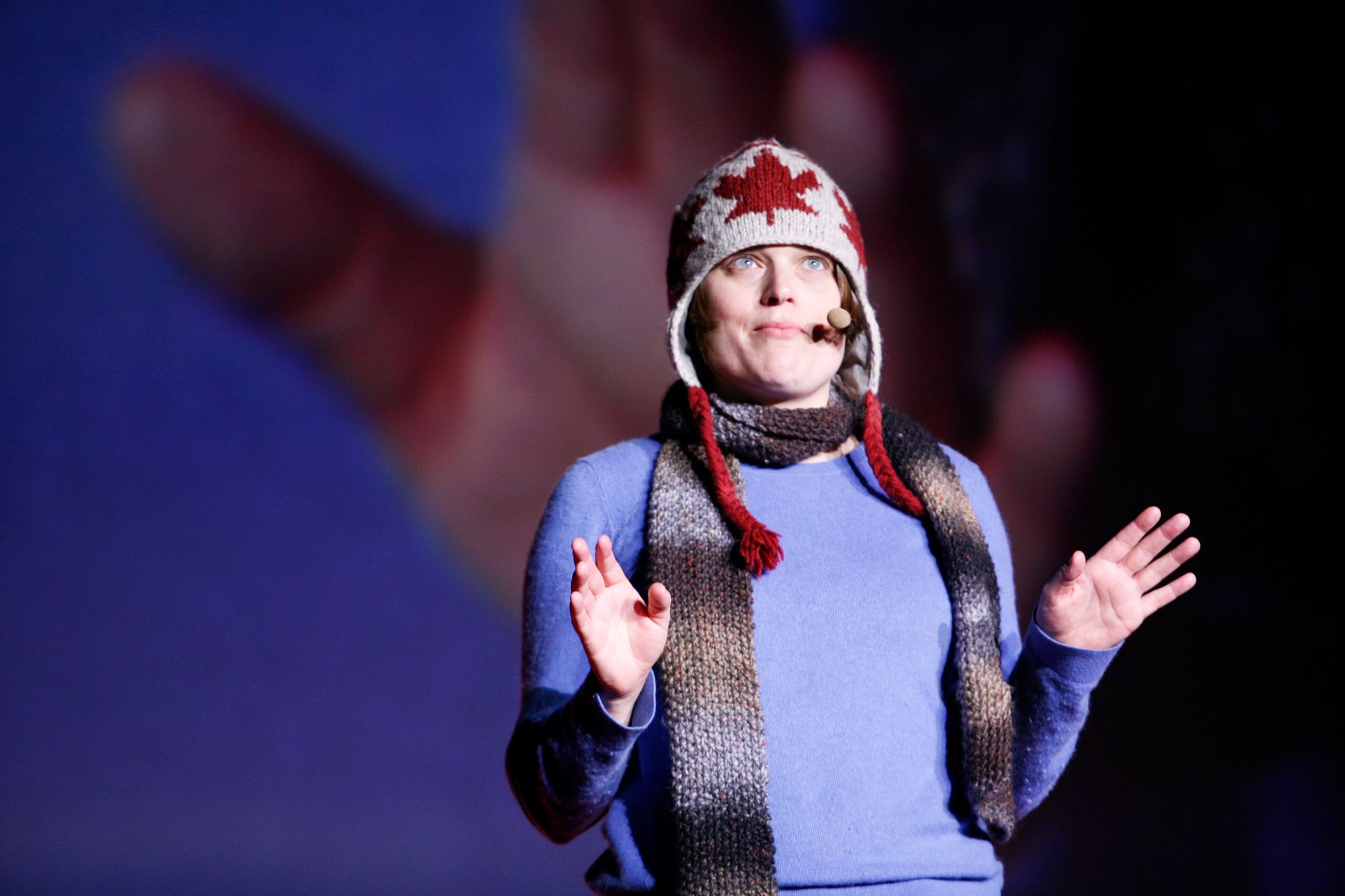
Erica Hargreave speaking at TEDxWarsaw

The title of Erica Hargreave‘s TEDx Warsaw talk, Permission to be the Other, couldn’t have been more perfect! She playfully spoke to a captivated audience about how to create immersive storyworlds by first allowing yourself to be creative and enter the minds of different characters. Take a glimpse into her brand of storytelling.

Erica is one of the World’s trailblazers in digital and transmedia storytellers, especially when it comes to bringing characters to life. She has been creating cross-platform media and immersive storyworlds before she knew there were terms for what she was doing. Currently her work is also directed at empowering students to create their own storyworlds at post-secondary schools in Canada. These courses are available online through BCIT to anyone in the World. You can learn more about them here: BCST 1193 – Social Media Storytelling and BCST 1073 – Building and Engaging Communities.

If you’d like to see more TEDx Talks from Erica, let TEDx know by filling in this form.

Filed Under: #StoryToGo, Erica Hargreave, Instructor News, Lori Yearwood, Our Community, Storytellers Tagged With: character storytelling, cross-platform media, Erica Hargreave, immersive storyworlds, storyworlds, TEDx, transmedia

Technology and Education ~ A Peace Fund Radio Discussion

September 8, 2015 by Lori Yearwood Leave a Comment

technology and education

It goes without saying that technology plays a daily role in the lives of most people.  It only makes sense then, that we have started incorporating it into our education system as part of a curriculum boost.  What happens though, when technology receives too much enthusiasm and is overused within the system or is simply not implemented properly? You begin to have two schools of thought, those who think technology is THE way of the future, therefore THE solution, and those who have started to notice the detrimental effects within our classrooms and are striving to change the movement.  One of our StoryToGo members, Lori Yearwood, was invited to participate in a fun, lively conversation about technology and education on The Peace Fund Radio Show.

Peace Fund Raido

The Peace Fund was founded by actor Adrian Paul, best known for his role of Duncan McCloud on the Highlander Series. The acronym ‘Peace’ stands for Protect, Educate, Aid Children Everywhere. Every Wednesday Adrian hosts a live radio show on LA Talk Radio to discuss relevant current issues.  As Adrian has a very large heart, yet even bigger playful personality, his shows encourage a great banter that is humorous yet real and quite relatable to its listeners.

technology and education
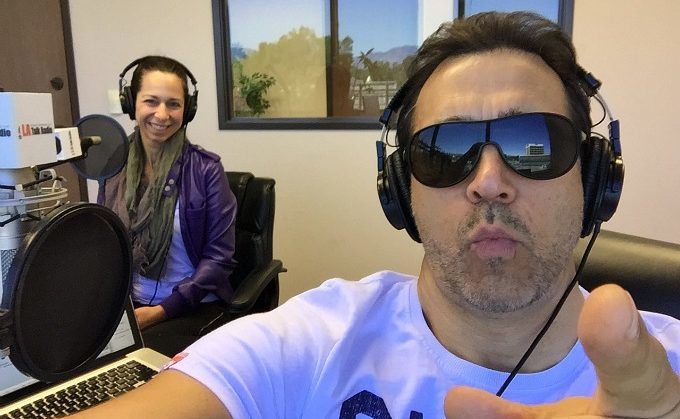
See what we mean? Adrian and Lori’s on air selfie.

Since Lori has an educational background, is currently immersed in digital media, and has two kids of her own that have progressed through the school system into high school, she had a lot of insight to bring to this hour long radio broadcast.  Listen to the full recording of the show here:

http://www.latalkradio.com/archives/Peace-040815.mp3


Also featured in this broadcast was 17 year old Michael Bervell who is the Executive Director of Hugs for Ghana. He spoke about his amazing organization which he runs together with his siblings and also commented on his take on the changes in education today.  Michael feels that students are losing their ability to be creative within the methods of instruction now used.

We’d love to hear about your thoughts and experiences as they relate to the pros and cons of technology and education. One key opinion coming out of this radio show was that keeping a balance of a variety of teaching methods seems to be best.

Filed Under: #StoryToGo, Lori Yearwood, Our Community, Storytellers Tagged With: Lori Yearwood

The Secrets to Digital Video Success

August 14, 2015 by Erica Hargreave Leave a Comment

This article was originally published in Reel West Magazine, and was republished here to archive it, after the close of the magazine.

If you have been to a media, technology, cross-platform storytelling or marketing conference in the past 5 years, you have likely heard predictions that the next great wave online is in digital video. These predictions make sense. YouTube is after all owned by Google, the world’s largest search engine, so it stands to reason that Google would give preferential treatment to YouTube video in searches on Google.

Why is it then, that for many, you are only being met with mixed success in your creation and sharing of digital video, even when the video production quality is beautiful?  This may have made many of you skeptical of the effectiveness of digital video and whether or not it can really be profitable for you. I know myself and my team were skeptical for awhile. We questioned whether the time had passed in which to make ourselves a success on YouTube.  Was making YouTube videos ‘spreadable’ and making money off of this platform only an achievable goal for early content creators on YouTube?

That was what was going through my head until my friend Steve Dotto of Dotto Tech decided to make YouTube the main platform for his technology show (that had previously been a television and radio series). Over the past 2 years, Steve has grown his YouTube Channel to over 80,000 subscribers and is nearing 5 million views. And he is making a living at it – both from YouTube itself and an associated Patreon crowdfunding campaign.

This prompted our team to start paying attention to our YouTube Channels – researching how to be met with success with our digital video, and experimenting on our Channels to see what worked for us.  We started our experiment 6 months ago, and with weekly consistency for the past 2 months. We were met with almost immediate success.  We started receiving regular invitations to join MCNs (Multi-Channel Networks), have had LA casting agents reach out to us about hosting new television series, have built an engaged audience that regularly comments on our videos, have a 60% increase in video views and a 23% increase in subscribers to our main channel, and we’ve started making a small income off of YouTube.

Why is our video sharing and content creation now working for us on YouTube, whereas before it was met with rather mixed success, as are so many other people’s videos? Aside from the odd viral cat video (or in our case, goat video), this all comes down to your ability to reach your target audience.

There are many ways to reach your target audience on YouTube, including:

  • Commenting on other recent videos on YouTube that are reaching your target audience;
  • Engaging the commenters on other recent videos on YouTube that are reaching your target audience;
  • Sharing your videos on your social media feeds with fitting hashtags that will help your target audience to find them;
  • Including your videos in blog posts;
  • Sharing your videos in niche communities online geared towards your target audience, including SubReddits, Facebook groups, Google+ Communities, LinkedIn Groups, as well as other forums;
  • Sharing your videos in your newsletter;
  • Reaching out to popular blogs, whose audience you think would enjoy your videos; and
  • Creating timely videos on topics that people are looking up online.

Perhaps the best way to reach your audience, and the way that we are beginning to see the best long term success with, is by understanding that Google is a search engine and most people visit Google and YouTube to search for something.  If you can figure out what your target audience is searching for, and then create video content that addresses what they are searching for, then you stand to grow your audience and video views at a much faster rate.  You can also do this on your past video content by searching for the most competitive keyword phrases that suit the video, and adding them to your video’s title, metadescription, and tags.

To research keywords that your that video content can be competitive with in reaching your target audience:

  • Use a keyword research tool to find the monthly Google searches for a variety of appropriate keyword phrases for the video in question, and record the number of monthly Google searches for each appropriate keyword phrase. Personally, our team uses AdWord’s Keyword Planner for this.
  • Then type each potential keyword phrase for the video into a YouTube search, and record the number of search results.
  • Divide the number of YouTube search results by the number of monthly Google searches for each of the keyword phrases.
  • Your ideal keyword phrases are the ones with the lower results / search ratios.
  • Use this keyword phrase in the video’s title, 1st paragraph of the metadescription, and tags.
  • If possible, add a secondary keyword phrase to the video’s title, metadescription and tags too.

We had a quickie, kid filmed, experimental video reach over 22,000 views by doing this.

In addition to this, if you create custom thumbnails for your videos, you will attract more eyes and as a result clicks to your videos.  It is all about visual storytelling, after all.

If you want to learn more about growing and engaging your audience on YouTube, and getting more views to your videos, join us in monthly YouTube experiments by following the hashtag #StoryToGoVideos. 

I also encourage you to join the broader media storytelling conversation by connecting with @AhimsaMedia on Twitter, the StoryToGo Facebook Community, and engaging with the #StoryToGo hashtag.

Filed Under: #StoryToGo, Erica Hargreave, Storytellers Tagged With: digital video

What Broadcast Media Can Learn From Bloggers About Community Building?

May 9, 2015 by Erica Hargreave Leave a Comment

This article was originally published in Reel West Magazine, and was republished here to archive it, after the close of the magazine.

Those of you that have been paying attention to all the news coming out of the Banff World Media Festival, you may be aware that one of the new and arguably overdue additions to the festival is The AMP Accelerator presented by Shaftesbury.  The AMP Accelerator focuses on branded storytelling in the form of scripted digital series.  BUT states that “great story isn’t enough.”  Rather that “you need to know who your audience is, where they are and what they want – and once you have them, how you keep them with you.”

For anyone who is a decent digital storyteller and / or blogger, this is nothing new – building not just audience, but COMMUNITY is how they reach sizeable worldwide audiences that trust them and make them of great value to brands.

Here are some of the lessons that the traditional broadcast storytellers can learn from bloggers:

  • Start developing your story and / or characters on social media and in digital niche communities in early conception and development.  This will allow you to test out your ideas, grow your community, and create different opportunities and revenue streams for your story.
  • Don’t chase after building on popular platforms, rather choose the platforms to build on that make sense to your story and that will allow you to connect with your digital niche community.

It’s no longer acceptable for a brand to broadcast their message and hope the sales come rolling in. Building a loyal fan base is a two way conversation and needs a human approach.

Hayley Griffiths of the Lovepuffin Travel Blog

To add to Hayley’s advice here, if you are simply broadcasting your story, you are missing the ‘social’ part of social media, and quite frankly missing the mark.  To build an engaged fanbase and ultimately a community, you need to listen and respond.  If your audience feels listened to and as though they are a part of your community, they will take a personal stake in your story and help to make sure you are a success.

  • Allowing your audience to engage with your story and take a personal stake in it, does not mean losing control of your story’s direction. You are still the story’s guide and decide which roads to take.

Sound, feel and look truthful. That is, one of the most valuable elements of blogging is the trustworthiness and community building element. By being authentic, bloggers are able to transcend their specific niche and even the electronic boundaries of their blogs and become part of the community of their readers. 

Raul Pacheco-Vega of raulpacheco.org

The authenticity and trust that Raul mentions are why brands want to work with bloggers to help them to tell their stories.

  • Keep the scripted content to the ‘Show’. Scripted content in your social media will be the death of it, and make you look unauthentic and unengaged.

Don’t fear negative feedback. Social media has created a culture where people demand to comment. Often traditional media will close comments on controversial topics or delete Facebook comments and it’s deadly, because it signals that the audience’s opinion is of no value. It’s important for me to give readers the opportunity to provide an alternate opinion. This is what can grow a community, people vested in a site, because the publisher values them as readers.

Ayngelina Brogan of Bacon is Magic

While what Ayngelina says here is true, remember there is a difference between healthy debate and offensive ‘troll’ behaviour.  If someone is turning a story negative for the community, and you have tried to respond in a manner which creates for a positive debate, yet they continue to respond aggressively and offensively, making the space and the story toxic, then for the good of the community, do not be afraid to delete their comments and ban them from the community.  Remember, this is still your story, and these trolls are in all likelihood not your target audience, so don’t let them destroy it for those that are.

  • Finally, building an engaged digital community is not a “build it and they will come scenario”, rather “build it, find your niche community, engage that niche community, and that niche community will help you to grow.”

Don’t forget to connect with us on twitter at @AhimsaMedia and stay tuned to all things StoryToGo with the #StoryToGo hashtag.

Filed Under: #StoryToGo, Blogging, Community Building, Erica Hargreave, Storytellers Tagged With: blogging, community building

« Previous Page
Next Page »

Primary Sidebar

#StoryToGo is a community designed to reflect storytelling today – shared both through traditional means of oral storytelling, radio, film and TV, and print; in addition to newer forms of media storytelling through the digital arts, including gaming, blogging, online video, and social media.

Explore Past Posts


Tags

accessibility AI for filmmaking AI for videography AR art art therapy art therapy activities augmented reality BCIT clown crowdfunding crowdsourced Elementari elevator pitch Extended Reality FilmFreeway filmmaking game game based learning game design game development health and wellness home education improv inclusive design literacy NFT non-fungible tokens online learning open education phishing scam photography pitching poetry social media storytelling storyworlds sustainable funding universal design video game virtual conference virtual reality Web Monetization XR XR Development

On the Beat with StoryToGo

Follow along on StoryToGo’s digital magazine for our latest case studies, upcoming free courses and webinars, technology tips and tricks, story musings,  and our latest job boards!

  • Case Studies
  • Tech Tips
  • Events
  • Jobs
  • Our Community
  • Courses

Copyright 2012 © 2026 · Ahimsa Media · Log in