• Skip to primary navigation
  • Skip to main content
  • Skip to primary sidebar

StoryToGo

Exploring storytelling in its many forms in this digital age

  • Our Story
    • Our Creatives
    • Join the StoryToGo Community
  • Community Resources
    • Web Monetization Guide
      • Web Monetization Resource Library
        • Web Monetization Tutorials
        • Web Monetization Research Papers
        • Interviews and Case Studies on Web Monetized Projects
      • Web Monetized Content Library
        • Web Monetized Courses
        • Web Monetized Podcasts
        • Web Monetized Social Networking Platforms
    • Podcasting with my Cat
      • Sustainable Funding Series Vlogcast
      • Encounters in EdTech Podcast
      • The Creative Farm Podcast
      • Boma Global Studios Podcast
    • Job Board
    • Storytelling Case Studies
  • Digital Magazine
    • Accessibility
    • Art Therapy
    • Blogging
    • Case Studies
      • Analyst Report
      • Extended Reality
      • Sustainable Funding
    • Community Building
    • EdTech
    • Gaming
    • Immersive and Interactive Media
      • XR
    • Performance Arts
      • Acting
    • Social Media
    • Storytellers
      • Alex Charters
      • Bjorn Yearwood
      • Erica Hargreave
      • Henry Hargreave
      • Jennifer Rose Garcia
      • Lori Yearwood
      • Mary McDonald
    • Tech Tips
    • Web Monetization
  • Professional Development
  • Calendar
  • Contact

Erica Hargreave

TEDx Warsaw: Erica Speaks on Immersive Storyworlds

September 8, 2015 by Lori Yearwood Leave a Comment

Erica Hargreave speaking at TEDxWarsaw

The title of Erica Hargreave‘s TEDx Warsaw talk, Permission to be the Other, couldn’t have been more perfect! She playfully spoke to a captivated audience about how to create immersive storyworlds by first allowing yourself to be creative and enter the minds of different characters. Take a glimpse into her brand of storytelling.

Erica is one of the World’s trailblazers in digital and transmedia storytellers, especially when it comes to bringing characters to life. She has been creating cross-platform media and immersive storyworlds before she knew there were terms for what she was doing. Currently her work is also directed at empowering students to create their own storyworlds at post-secondary schools in Canada. These courses are available online through BCIT to anyone in the World. You can learn more about them here: BCST 1193 – Social Media Storytelling and BCST 1073 – Building and Engaging Communities.

If you’d like to see more TEDx Talks from Erica, let TEDx know by filling in this form.
Filed Under: #StoryToGo, Erica Hargreave, Instructor News, Lori Yearwood, Our Community, Storytellers Tagged With: character storytelling, cross-platform media, Erica Hargreave, immersive storyworlds, storyworlds, TEDx, transmedia

The Secrets to Digital Video Success

August 14, 2015 by Erica Hargreave Leave a Comment

This article was originally published in Reel West Magazine, and was republished here to archive it, after the close of the magazine.

If you have been to a media, technology, cross-platform storytelling or marketing conference in the past 5 years, you have likely heard predictions that the next great wave online is in digital video. These predictions make sense. YouTube is after all owned by Google, the world’s largest search engine, so it stands to reason that Google would give preferential treatment to YouTube video in searches on Google.

Why is it then, that for many, you are only being met with mixed success in your creation and sharing of digital video, even when the video production quality is beautiful?  This may have made many of you skeptical of the effectiveness of digital video and whether or not it can really be profitable for you. I know myself and my team were skeptical for awhile. We questioned whether the time had passed in which to make ourselves a success on YouTube.  Was making YouTube videos ‘spreadable’ and making money off of this platform only an achievable goal for early content creators on YouTube?

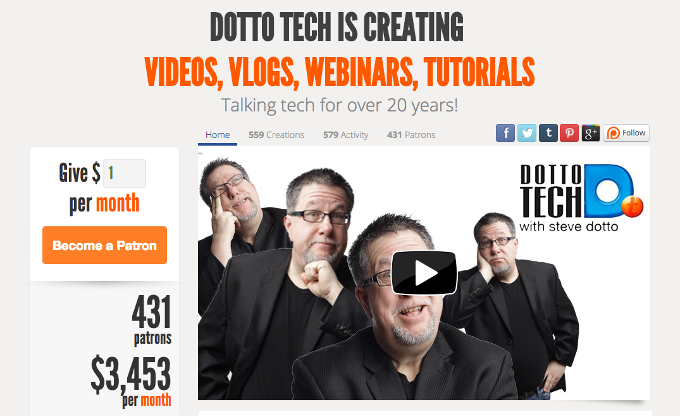
That was what was going through my head until my friend Steve Dotto of Dotto Tech decided to make YouTube the main platform for his technology show (that had previously been a television and radio series). Over the past 2 years, Steve has grown his YouTube Channel to over 80,000 subscribers and is nearing 5 million views. And he is making a living at it – both from YouTube itself and an associated Patreon crowdfunding campaign.

This prompted our team to start paying attention to our YouTube Channels – researching how to be met with success with our digital video, and experimenting on our Channels to see what worked for us.  We started our experiment 6 months ago, and with weekly consistency for the past 2 months. We were met with almost immediate success.  We started receiving regular invitations to join MCNs (Multi-Channel Networks), have had LA casting agents reach out to us about hosting new television series, have built an engaged audience that regularly comments on our videos, have a 60% increase in video views and a 23% increase in subscribers to our main channel, and we’ve started making a small income off of YouTube.

Why is our video sharing and content creation now working for us on YouTube, whereas before it was met with rather mixed success, as are so many other people’s videos? Aside from the odd viral cat video (or in our case, goat video), this all comes down to your ability to reach your target audience.

There are many ways to reach your target audience on YouTube, including:

  • Commenting on other recent videos on YouTube that are reaching your target audience;
  • Engaging the commenters on other recent videos on YouTube that are reaching your target audience;
  • Sharing your videos on your social media feeds with fitting hashtags that will help your target audience to find them;
  • Including your videos in blog posts;
  • Sharing your videos in niche communities online geared towards your target audience, including SubReddits, Facebook groups, Google+ Communities, LinkedIn Groups, as well as other forums;
  • Sharing your videos in your newsletter;
  • Reaching out to popular blogs, whose audience you think would enjoy your videos; and
  • Creating timely videos on topics that people are looking up online.

Perhaps the best way to reach your audience, and the way that we are beginning to see the best long term success with, is by understanding that Google is a search engine and most people visit Google and YouTube to search for something.  If you can figure out what your target audience is searching for, and then create video content that addresses what they are searching for, then you stand to grow your audience and video views at a much faster rate.  You can also do this on your past video content by searching for the most competitive keyword phrases that suit the video, and adding them to your video’s title, metadescription, and tags.

To research keywords that your that video content can be competitive with in reaching your target audience:

  • Use a keyword research tool to find the monthly Google searches for a variety of appropriate keyword phrases for the video in question, and record the number of monthly Google searches for each appropriate keyword phrase. Personally, our team uses AdWord’s Keyword Planner for this.
  • Then type each potential keyword phrase for the video into a YouTube search, and record the number of search results.
  • Divide the number of YouTube search results by the number of monthly Google searches for each of the keyword phrases.
  • Your ideal keyword phrases are the ones with the lower results / search ratios.
  • Use this keyword phrase in the video’s title, 1st paragraph of the metadescription, and tags.
  • If possible, add a secondary keyword phrase to the video’s title, metadescription and tags too.

We had a quickie, kid filmed, experimental video reach over 22,000 views by doing this.

In addition to this, if you create custom thumbnails for your videos, you will attract more eyes and as a result clicks to your videos.  It is all about visual storytelling, after all.

If you want to learn more about growing and engaging your audience on YouTube, and getting more views to your videos, join us in monthly YouTube experiments by following the hashtag #StoryToGoVideos. 

I also encourage you to join the broader media storytelling conversation by connecting with @AhimsaMedia on Twitter, the StoryToGo Facebook Community, and engaging with the #StoryToGo hashtag.

Filed Under: #StoryToGo, Erica Hargreave, Storytellers Tagged With: digital video

What Broadcast Media Can Learn From Bloggers About Community Building?

May 9, 2015 by Erica Hargreave Leave a Comment

This article was originally published in Reel West Magazine, and was republished here to archive it, after the close of the magazine.

Those of you that have been paying attention to all the news coming out of the Banff World Media Festival, you may be aware that one of the new and arguably overdue additions to the festival is The AMP Accelerator presented by Shaftesbury.  The AMP Accelerator focuses on branded storytelling in the form of scripted digital series.  BUT states that “great story isn’t enough.”  Rather that “you need to know who your audience is, where they are and what they want – and once you have them, how you keep them with you.”

For anyone who is a decent digital storyteller and / or blogger, this is nothing new – building not just audience, but COMMUNITY is how they reach sizeable worldwide audiences that trust them and make them of great value to brands.

Here are some of the lessons that the traditional broadcast storytellers can learn from bloggers:

  • Start developing your story and / or characters on social media and in digital niche communities in early conception and development.  This will allow you to test out your ideas, grow your community, and create different opportunities and revenue streams for your story.
  • Don’t chase after building on popular platforms, rather choose the platforms to build on that make sense to your story and that will allow you to connect with your digital niche community.

It’s no longer acceptable for a brand to broadcast their message and hope the sales come rolling in. Building a loyal fan base is a two way conversation and needs a human approach.

Hayley Griffiths of the Lovepuffin Travel Blog

To add to Hayley’s advice here, if you are simply broadcasting your story, you are missing the ‘social’ part of social media, and quite frankly missing the mark.  To build an engaged fanbase and ultimately a community, you need to listen and respond.  If your audience feels listened to and as though they are a part of your community, they will take a personal stake in your story and help to make sure you are a success.

  • Allowing your audience to engage with your story and take a personal stake in it, does not mean losing control of your story’s direction. You are still the story’s guide and decide which roads to take.

Sound, feel and look truthful. That is, one of the most valuable elements of blogging is the trustworthiness and community building element. By being authentic, bloggers are able to transcend their specific niche and even the electronic boundaries of their blogs and become part of the community of their readers. 

Raul Pacheco-Vega of raulpacheco.org

The authenticity and trust that Raul mentions are why brands want to work with bloggers to help them to tell their stories.

  • Keep the scripted content to the ‘Show’. Scripted content in your social media will be the death of it, and make you look unauthentic and unengaged.

Don’t fear negative feedback. Social media has created a culture where people demand to comment. Often traditional media will close comments on controversial topics or delete Facebook comments and it’s deadly, because it signals that the audience’s opinion is of no value. It’s important for me to give readers the opportunity to provide an alternate opinion. This is what can grow a community, people vested in a site, because the publisher values them as readers.

Ayngelina Brogan of Bacon is Magic

While what Ayngelina says here is true, remember there is a difference between healthy debate and offensive ‘troll’ behaviour.  If someone is turning a story negative for the community, and you have tried to respond in a manner which creates for a positive debate, yet they continue to respond aggressively and offensively, making the space and the story toxic, then for the good of the community, do not be afraid to delete their comments and ban them from the community.  Remember, this is still your story, and these trolls are in all likelihood not your target audience, so don’t let them destroy it for those that are.

  • Finally, building an engaged digital community is not a “build it and they will come scenario”, rather “build it, find your niche community, engage that niche community, and that niche community will help you to grow.”

Don’t forget to connect with us on twitter at @AhimsaMedia and stay tuned to all things StoryToGo with the #StoryToGo hashtag.

Filed Under: #StoryToGo, Blogging, Community Building, Erica Hargreave, Storytellers Tagged With: blogging, community building

Revisiting Storyworlds from Your Childhood Self

February 10, 2015 by Erica Hargreave Leave a Comment

This article was originally published in Reel West Magazine, and was republished here to archive it, after the close of the magazine.

These days there’s always a new buzz word when it comes to storytelling and technology. Admittedly these usually make me groan, as, as they gain in popularity, they bring with them the so-called gurus and prophets, who spend more time talking about them tha they do actually creating. Part of my eye rolling comes with the fact that by the time it’s a buzz word, and people are dropping it left, right and centre in conversation, it is no longer cutting edge and people start over using it (if I never hear the word ‘selfie’ again, I will be one happy gal). Oh and please stop using the term ‘new media’. It stopped being ‘new’ ages ago. Then there’s the infighting between groups of media makers – using different terms for the same thing, as they aren’t fans of some of the ‘so called prophets’ – really are transmedia and convergent storytelling all that different? But mostly I cringe at these terms and the posturing to be seen as a leader of them as none of these terms describe new concepts. Think about it.  The only thing new to storytelling are a few of the platforms in which we tell our tales on now, but conceptually people have been doing things like transmedia and convergent storytelling all throughout human history.  We’ve just become a little precious about spotlighting ourselves as trail blazers.

One term that you may have heard if you’ve been attending conferences like Storyworld Quest, Merging Media, and Storyworld, that is becoming a buzz word with media makers is ‘storyworlds’ or ‘storyworld creation’. This is one term that admittedly I love, but again is not new.  The concept of storyworlds is the idea of having stories that overlap with each other, that have different platforms in which people can experience aspects of the story on and allow the audience to engage within the story and take a personal stake in it.

I suspect most of you at some point have created a storyworld as children.  One that standouts for me from childhood was created by my siblings, cousins and myself at my grandparent’s place. This storyworld involved our rooftop ‘Dairy Queen’ (which was a place of imaginative play and theatre – rather than ice cream), another rooftop Star Wars play zone (for creating our own brand of fan fiction), magical beasts (as we watched the shoreline for the Cadborosaurus), mysteries to be solved (in the form of a coy pinching otter), our own Olympic Summer Games resided over by my grandfather in top hat and tails (for our gaming component), the ‘how-to’ project of the tree fort we were constantly rebuilding, and our own foodie adventures in homemade fruit leather creations.  

Think about it.  I bet you too can remember storyworlds that you were a part of as a child.

So what is that magical ingredient that makes some people more successful in creating storyworlds, than others, in this age of social and mobile media?  Building community!  This means engaging, listening, empowering others to feel a part of the story and engage within it, and letting go of the reigns and not trying to control everything.  As media makers, this means remembering that lesson we learned in Kindergarten – it’s not all about us!  While you can still broadcast – also ENGAGE – let your audience feel they have a stake in your story and it’s success. And remember we can’t do it all alone – just like I needed my cousins, siblings, and adult family members to help create that childhood storyworld, you need to build community – both within your audience and with other creatives – and allow them to take a stake within your story, without micromanaging and trying to control everything.

Give yourself permission to embrace the kid in you again and begin building storyworlds around your projects.  Once you do, please tell us about it at @AhimsaMedia or via the #StoryToGo hashtag, and invite us into your storyworld.

Filed Under: #StoryToGo, Case Studies, Erica Hargreave, Storytellers Tagged With: storyworlds

Weathering Social Media Storms and Trolls

November 3, 2014 by Erica Hargreave Leave a Comment

This article was originally published in Reel West Magazine, and was republished here to archive it, after the close of the magazine.

It was a dark and stormy night, but the worst of the nightmare was not outside, but on our digital devices. Social media can be a powerful storytelling tool for social good, but it can be equally as destructive a force, especially during a social media storm, as we’ve seen this past October.

With the shootings in Ottawa, one Alberta journalist shared a facebook post on her disgust at a Cold Lake Mosque being vandalized in response to the events in Ottawa. To her shock the post received over 700 comments, not all of which were positive.  She found her post was amidst the social media storm caused by the Ottawa shooting, of people guessing as to whom to blame for the events in Ottawa. While for the most part she wanted to encourage conversation, some of it was hateful, so she found herself deleting the most offensive comments.

The same day we sat listening to the opening panel of StoryWorld Quest in Edmonton and heard a panelist address what to do about persistent, negative attacks by an individual online. The well meaning panelist suggested every conversation could be made positive by replying. This had me hopping in my seat, as while this would be lovely if it were true, it simply is not.  There are what are termed ‘trolls’ online, who no matter what you say, will only hear what they want, and will persist with negativity. With such individuals, the best thing you can do is to simply disengage with them.  I have even at times blocked individuals from our storytelling feeds, when they persisted in responding to our stories in a manner that destroys the story’s enjoyment for both our audience and ourselves.

I was glad I’d addressed this on my panel, as as the conference closed, allegations of sex scandal came out towards Jian Ghomeshi, and Canadian’s social media broke out into a massive storm of ‘he said – she said – we’re guessing’. As a media storytelling prof, I tried to post a middle of the road suggestion, that we reframe from passing judgements and spreading rumours, either which way, before we know the facts. Apparently that was not as innocuous a post as I thought, as debate broke out on my post, and I acquired my own troll. Alas this was not a singular story. If you ever want to see angry Canadians, this was the hot topic.  The debate on my Facebook post was mild, compared to most. Further fuelling this storm, and arguably as dangerous as the trolls, were media attention seekers, fanning the flames to get on TV and increased web traffic. The result on Canadians on social media?  Feeds filled with anxious individuals.

So what do you do, when you find yourself amidst such a social media storm or under attack by a troll?

  1. Reply back and see if you can turn the conversation around.
  2. Disengage.
  3. Erase any highly offensive posts, after taking a screenshot, in case you need it for the police.
  4. Block repeat offenders.
  5. Change the story on your feed, by beginning to share different content.
  6. Click the ‘I don’t want to see this.’ option on your social media feeds, around content that is stressing you out.
  7. Switch off your devices and spend some quality time in the real world.

It’s not healthy for any of us to engage constantly in a negative environment, so if that is what is happening on your social media, never be afraid to take action to protect yourself and your audience.

On the note of more upbeat stories, feel free to tweet us at @AhimsaMedia, and I am sure we can find some positive Canadian stories to share with you.

Filed Under: #StoryToGo, Erica Hargreave, Social Media, Storytellers Tagged With: social media

Crowdfunding – Creating New Possibilities and Sidestepping Gatekeepers

September 4, 2014 by Erica Hargreave Leave a Comment

This article was originally published in Reel West Magazine, and was republished here to archive it, after the close of the magazine.

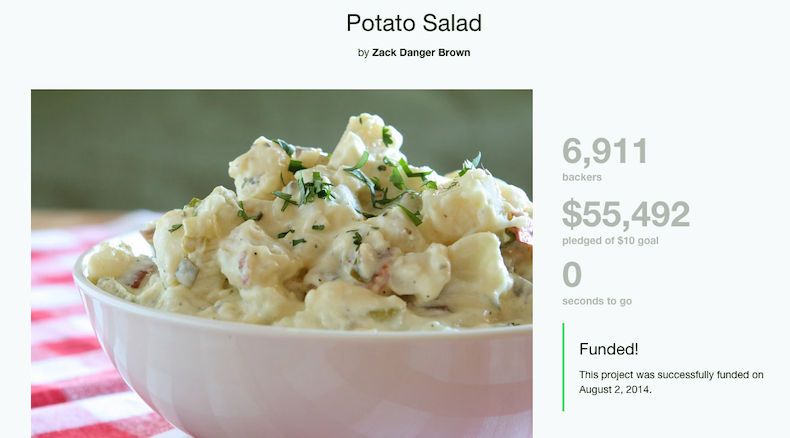
Whether you laughed or exclaimed “WTF!” that a dude jokingly posts “I’m making potato salad. Basically I’m just making potato salad. I haven’t decided what kind yet.” on Kickstarter and he raises $55,492, it does make you sit up a little straighter and think maybe, just maybe, you should be paying crowdfunding a little more attention.  What was Zack Danger Brown’s intention with his potato salad Kickstarter campaign, aside from a good chuckle?  He’d publicly hoped to raise $10, while secretly his goal was $60.  Never in his wildest dreams did he expect to raise $55,492.  Who would?!?

As a creator, this excites me.  Whether you’ve long been a fan of crowdfunding or have been skeptically watching from the sidelines, this past year has carried some telling examples with it for us creators. Examples that suggest crowdfunding may indeed be a viable alternative to play with in the Canadian film and TV funding game, opening the playing field up to those creators who are willing to put in the work to experiment with a new model of funding, sidestepping traditional gatekeepers.

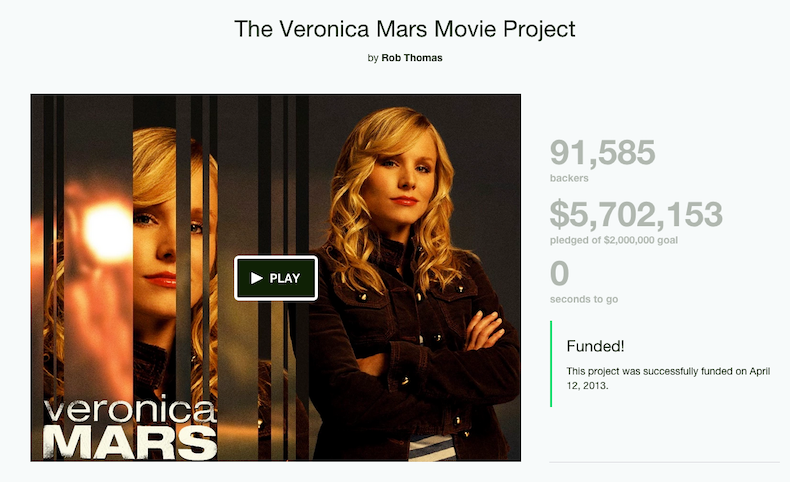
After all, it is not just potato salad that is getting funded. 2013 saw a revival of the Veronica Mars stories, as after 7 years of being off network television, Director Rob Thomas, in a last ditch attempt to raise financing for the film started a Kickstarter campaign.  He admittedly was skeptical if it would work.  You see he needed $2 million to go to camera, and at that time the highest raising Kickstarter campaign had been $900,000.  It would seem Rob need not have worried. He raised the first $1 million in the first 4 hours!  By 12 hours in, he’d raised the $2 million that he needed to shoot. The campaign continued on to raise a total of $5,702,153 from 91,585 backers, unlocking a variety of the campaign’s stretch goals.

Many pondered whether this was just a one time phenomenon, but since then Reading Rainbow has been revived too, thanks to a Kickstarter campaign raising $5,408,916 (it’s goal was $1 million).  Then this summer Coolest Cooler took over the torch of Kickstarter’s highest raising campaign yet raising $13,285,226, while it’s goal was only $50,000.

I hear a few mutters of “Well … those are big American entities, with pre-existing fan bases.”  True enough, at least in the case of Veronica Mars and Reading Rainbow, but our Canadian creators’ campaigns are nothing to scoff at.  Take for example Indie Game: the Movie, by Manitoba filmmakers James Swirsky and Lisanne Pajot – with two Kickstarter campaigns they raised $94,676 for the documentary.  Their goal had been $50,000.  They most certainly considered this a success, and in the process they had inadvertently marketed their documentary, creating a fan base and anticipation for it’s release. Win – Win!

Interviews with Canadian Creatives on Crowdfunding

In interviewing a number of other Canadian creatives who have successfully crowdfunded their own projects, here is what they learned in the process:

Steve Dotto

Past: Radio and TV Producer & Host, Now: YouTube Publisher

The Campaign: 

After spending many years on network TV, I moved my product to YouTube. When I was in traditional television, my customer was the sponsor, my customer now, is my viewer, the purpose of a crowdfunding campaign is to create a direct connection between the viewer and content creator. Ideally I was looking to recapture some revenue, from my community. I have nearly 40,000 subscribers to my YouTube channel, a small contribution from each one would make for very healthy income. Community support allows me to create more compelling content that isn’t focused on pleasing advertisers instead of viewers.

Crowdfunding Platform of Choice:

The crowdfuding platform I am currently using is called Patreon (patreon.com/dottotech), It was designed to bring audiences and content creators together. By becoming a patron, an individual can choose to support an individual content creator, musician, artist, writer, or in my case YouTube Publisher. Crowdfunding closes the gap, and removes the middle man, so you don’t have to deal with networks or other publishers in order to reach your audience.

Patreon is one of the first on the market offering this sort of service. I think it is an outstanding option for any content creator. One caveat is YouTube is looking at offering similar services, and if they get into the game it could make for a compelling option.

Advice:

First, mature the product you are offering to the community. I think it is important to establish your brand and offer before asking people to invest in you.

Also I “primed the pump”. I did a small private campaign to get some activity in my account before asking the general public to support me. I think if people visit any online product and hear crickets, you will have a difficult time converting them into supporters.

Sarah Keenleyside

Inkblot Media (& Joseph Clement, Producer / Director of Auratic Media)

The Campaign:

I am helping produce a documentary about Integral House, one of the most architecturally significant homes in North America – and its owner Jim Stewart, who is the world’s most published calculus mathematicians. The house is remarkable, not only because of its stunning architecture by Shim Sutcliffe Architects, but also because it functions as a concert space and has hosted such celebrated musicians as Phillip Glass, Misha Breuggergosman and The New Orford Quartet.

After hitting a few frustrating dead ends while pursuing traditional financing, we quickly decided to fundraise the budget ourselves offering experiences within the house (concerts, an art event) as rewards for interested investors. So far Joseph has successfully hosted three events in the house, the proceeds of which have kept the production afloat.

Crowdfunding Platform of Choice:

We used none. Instead, Joseph created a site for the film where people could purchase tickets: auraticmedia.com/tickets. So far, all of the events have been well attended through word of mouth, but we will be doing a final, major concert or event in the house to complete our production funding, and then we’re hoping to go back to the traditional sources to help us finish it off. 

Advice:

I think it’s important to ask yourself, why should people care about your project? What are investors getting out of the investment? Even $5 and the time it takes to donate $5 is a big ask based solely on your word that they will enjoy the film when it’s finished. 

I think our campaign is highly unusual, because we can offer such desirable rewards, and because the rewards are so connected to the film itself. In a way, we didn’t need to prove that the film will be good – visiting the house is reward enough! 

But I have given money to many campaigns in the past, and looking back, they all drew me in for very specific reasons – i.e. I was familiar with the person/people behind the campaign and I admired their previous work; I cared about the cause or subject matter featured in the film; I was curious about the subject matter; I liked their technical approach and wanted to see it realized; or the rewards were just so rewarding that I couldn’t resist (in most cases, the reward was a book that was being presold).

Daniel Baylis

Writer and Adventurer (and Digital Editor at Air Canada’s enRoute Magazine)

The Campaign:

A couple years ago, I turned 30 years old and decided to mark the occasion by travelling around the world for an entire year. The objective of my travels was not simply to drift, but to find meaningful ways to engage with the communities I visited. In some cases I succeeded. In other cases I did not. Upon returning to Canada, I began the process of writing a memoir about my journey. I decided to independently release this book, and crowdfunding became an integral (and obvious) step in the process of sharing my story with the world. 

Now, you can see the book at thetraveller.ca: The Traveller: Notes from an Imperfect Journey Around the World.

Crowdfunding Platform of Choice:

I used Indiegogo and would absolutely use the platform again. They’ve got a support team in place that was responsive to any concerns. In fact, they provided unsolicited coaching tips that proved vital in my campaign. For example, I hit my $5000 goal within three days and Stephan from the service team encouraged me to set “stretch goals” to communicate how I could take my project further with more funding.

Advice:

Don’t rush into it. Take the time to plan out your attack, communicate your goal clearly and then make a stellar video.

Kemp Edmonds

Part-Time Filmmaker Kemp Edmonds (cbc.ca/player/Shows/ID/2303020192) advices that “its like politics: for success you need to ask anyone who you can to take part. You need to sell yourself and your campaign 24/7 to ensure success. Also build partnerships and have others feature what you are doing. Think PR. Think unique hook. Why does your story matter to the greater audience? How can you get a newspaper or radio reporter to jump on the story? Then use every social media channel you can you reach, engage and converse with folks, especially those with places to amplify your message, about your campaign.”

Doreen Pendgracs

And novelist Doreen Pendgracs (doreenpendgracs.com/?s=crowdfunding) suggests you study the algorithm of the crowdfunding platform you are on, so that you benefit from their help in marketing your campaign.  She also advices you keep the video that you are using to promote your campaign short.  She created one 8-minute video, that should have been two shorter videos.

Final Words

Just remember, don’t become greedy with your crowdfunding campaign, but do be realistic in your budgeting. Make sure that you are not overselling and can deliver what you are promising.

When you start your crowdfunding campaign, do be sure to tell us by tweeting us at @AhimsaMedia and / or using the #StoryToGo hashtag.  We love seeing what our Canadian creatives are up to!

Filed Under: #StoryToGo, Erica Hargreave, Storytellers, Sustainable Funding Tagged With: crowdfunding

« Previous Page

Primary Sidebar

#StoryToGo is a community designed to reflect storytelling today – shared both through traditional means of oral storytelling, radio, film and TV, and print; in addition to newer forms of media storytelling through the digital arts, including gaming, blogging, online video, and social media.

Explore Past Posts


Tags

accessibility AI for filmmaking AI for videography AR art art therapy art therapy activities augmented reality BCIT clown crowdfunding crowdsourced Elementari elevator pitch Extended Reality FilmFreeway filmmaking game game based learning game design game development health and wellness home education improv inclusive design literacy NFT non-fungible tokens online learning open education phishing scam photography pitching poetry social media storytelling storyworlds sustainable funding universal design video game virtual conference virtual reality Web Monetization XR XR Development

On the Beat with StoryToGo

Follow along on StoryToGo’s digital magazine for our latest case studies, upcoming free courses and webinars, technology tips and tricks, story musings,  and our latest job boards!

  • Case Studies
  • Tech Tips
  • Events
  • Jobs
  • Our Community
  • Courses

Copyright 2012 © 2026 · Ahimsa Media · Log in